Stories behind the objects we keepExplore the blog
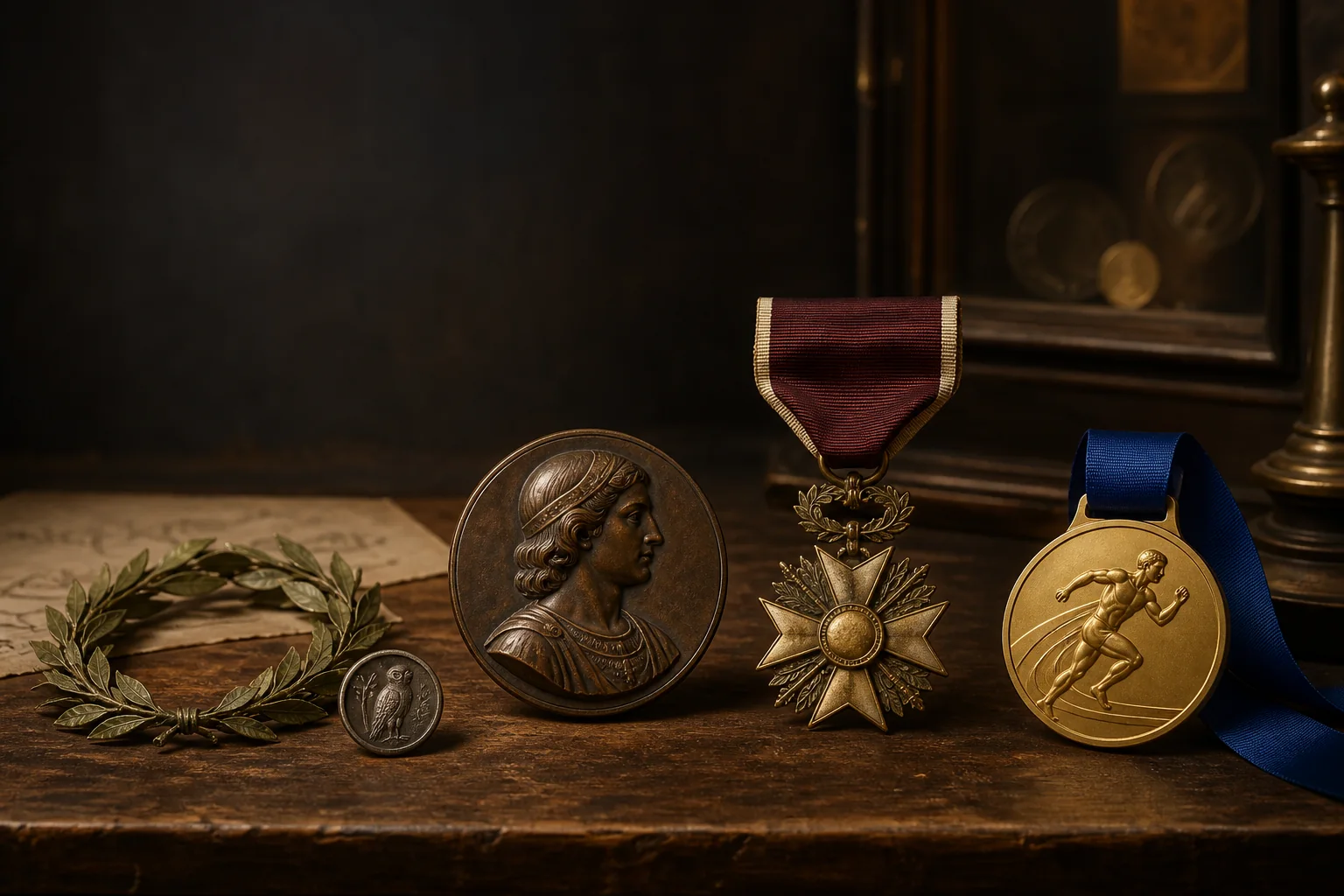
Editorial still life tracing medals from an ancient wreath and Renaissance medallion to ribboned honors and a modern sports medal

A five-part visual history

Why we give medals.

Before a medal hung from a ribbon, it was a portrait, a message and a small promise that a person or event would be remembered.

8 minute readHistory & culture

Original editorial concept image. The objects are historically inspired and are not presented as specific artifacts.

01

Before the object

The medal began as an idea: make honor visible.

Human societies have always marked achievement, loyalty and memory. Ancient Greek athletes were crowned with branches and wreaths; Roman rulers placed portraits and victories on coins and large medallion-like objects. These traditions supplied the visual language—profile portraits, gods, inscriptions and symbols—but the medal as an independent commemorative art form came much later.

History note: ancient Olympic champions did not receive gold medals. At Olympia, the official prize was a sacred olive wreath. The familiar gold–silver–bronze podium belongs to the modern era.
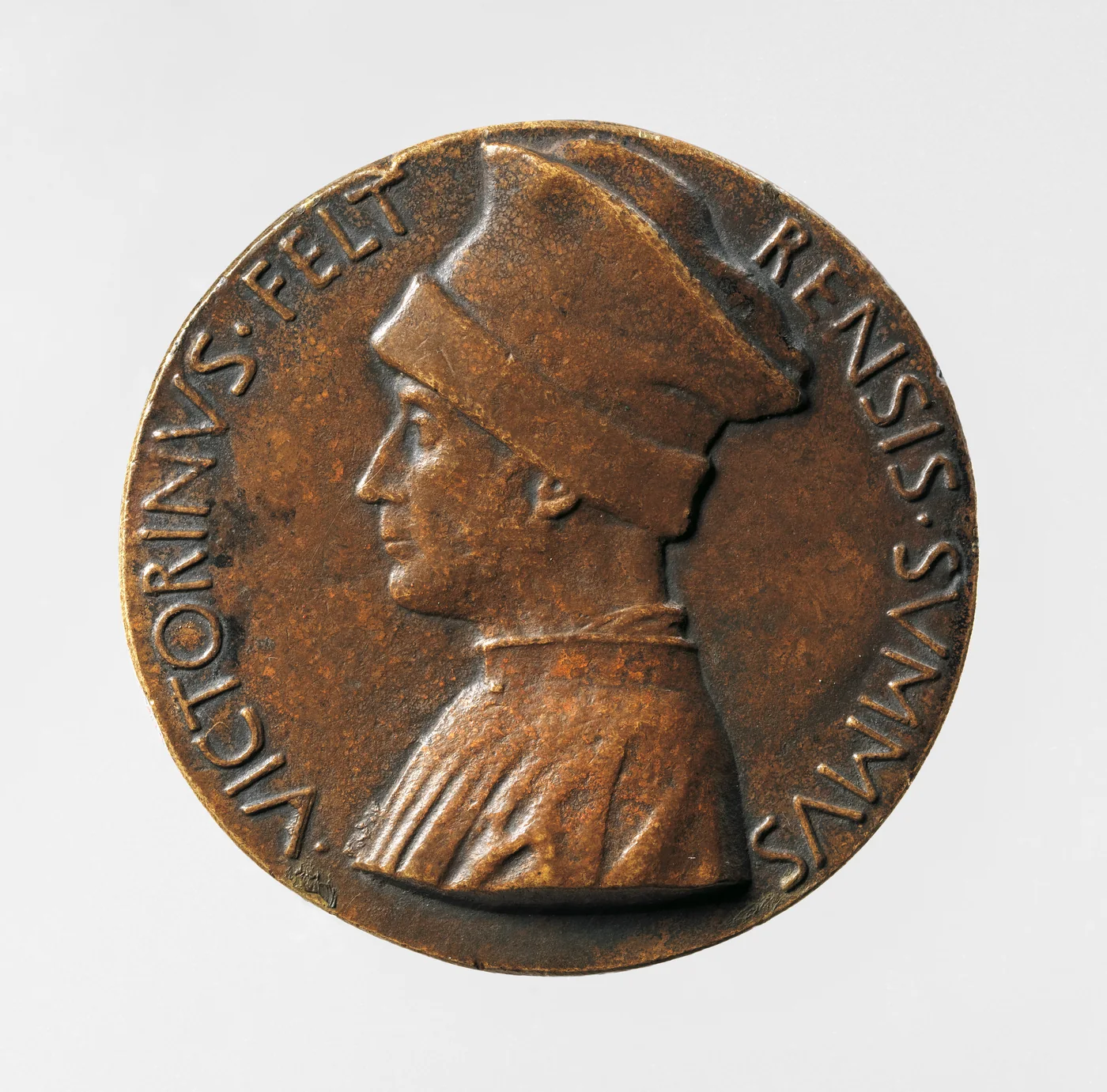
Bronze portrait medal of Vittorino Rambaldoni da Feltre by Pisanello
Pisanello, Portrait medal of Vittorino Rambaldoni da Feltre, model 1446–47. The Metropolitan Museum of Art, public domain.
15th
century

Act II · A portrait that could travel

The Renaissance invents the medal.

In fifteenth-century Italy, renewed interest in classical antiquity met a new fascination with individual identity. Around 1438, the artist Pisanello created a cast portrait medal of the Byzantine emperor John VIII Palaiologos. A recognizable person appeared on one side; a symbolic scene on the other.

Unlike money, the object was not made to buy anything. It was commissioned to circulate memory. Rulers, scholars and patrons could give medals as diplomatic gifts, family records or carefully designed statements about who they were. By the end of the century, the fashion had spread across Europe.
Act III · Memory becomes public

Courts, cities and nations tell stories in metal.

Over the following centuries, medals moved beyond personal portraiture. They marked coronations, marriages, military victories, voyages, anniversaries and civic events. Because both sides could carry imagery and words, a medal became a miniature public monument—durable enough to outlive the occasion that created it.

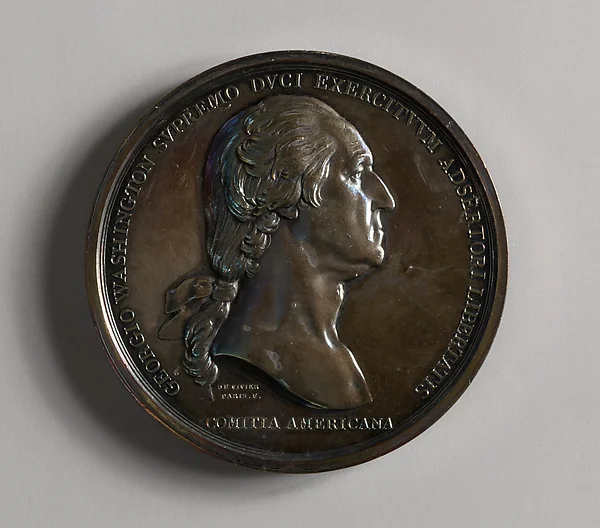
This late eighteenth-century silver medal portrays George Washington. The format still echoes the Renaissance profile portrait, but its subject now belongs to a new political world. Medals could preserve not only a face, but an interpretation of history.

1770
–1800
Late eighteenth-century silver portrait medal of George Washington
Pierre-Simon-Benjamin Duvivier, silver medal, 1770–1800. The Metropolitan Museum of Art, public domain.
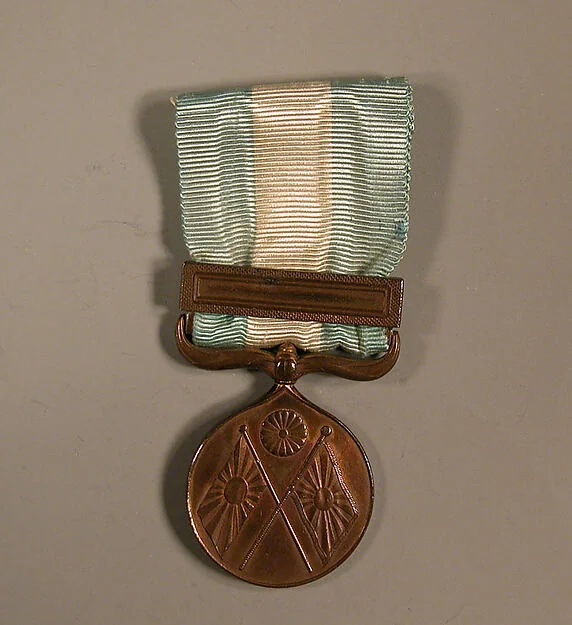
Late nineteenth-century Japanese medal suspended from a green and white ribbon
Japanese medal with green-and-white ribbon, late 19th century, Meiji period. The Metropolitan Museum of Art, public domain.
18th–19th
centuries

Act IV · Honor is worn

The ribbon turns a keepsake into a public sign.

A medal displayed in a cabinet remembers someone. A medal worn on the body also tells everyone else. Ribbon-suspended medals became increasingly associated with service, campaigns, courage and membership. Colors could identify an award from a distance and develop their own traditions of symbolism.

The change was not merely practical. A wearable medal connected the private memory of an experience with a public language of recognition. During the nineteenth century, official systems of campaign and service awards expanded, and rows of ribbons became condensed biographies.

At Athens in 1896, first place received silver—not gold. The modern three-medal order arrived in 1904.

The Olympic turning point
05

From wreath to podium

Sport gives the medal its most familiar meaning.

When the modern Olympic Games opened in Athens in 1896, the ancient wreath tradition was still visible. First-place athletes received a silver medal, an olive branch and a diploma; second place received a bronze or copper medal and a laurel branch. There was no gold medal for the winner and no standard third-place award.

The gold–silver–bronze order for the top three appeared at the 1904 St. Louis Games. From there, the medal became inseparable from the image of the podium. Its meaning also widened: school sports days, marathons, community competitions and local clubs adopted the same simple ritual—an achievement becomes real when it can be held, worn and taken home.

One small object.
Four human needs.

The medal has changed shape, material and purpose, yet its emotional job remains remarkably stable. It turns an invisible quality—effort, courage, belonging or remembrance—into something physical.

01

To remember

A person, a journey, a victory or a date that might otherwise fade.

02

To recognize

Achievement becomes visible when a community agrees that it matters.

03

To belong

Military units, teams, schools and clubs use medals to connect individual stories.

04

To pass on

A medal can outlive the ceremony and carry its story into another generation.