
International sourcing / Payment risk
How to pay a custom manufacturer safely.
Twelve checks to complete before sending a deposit—and the approval records, production evidence and inspection steps that should follow it.
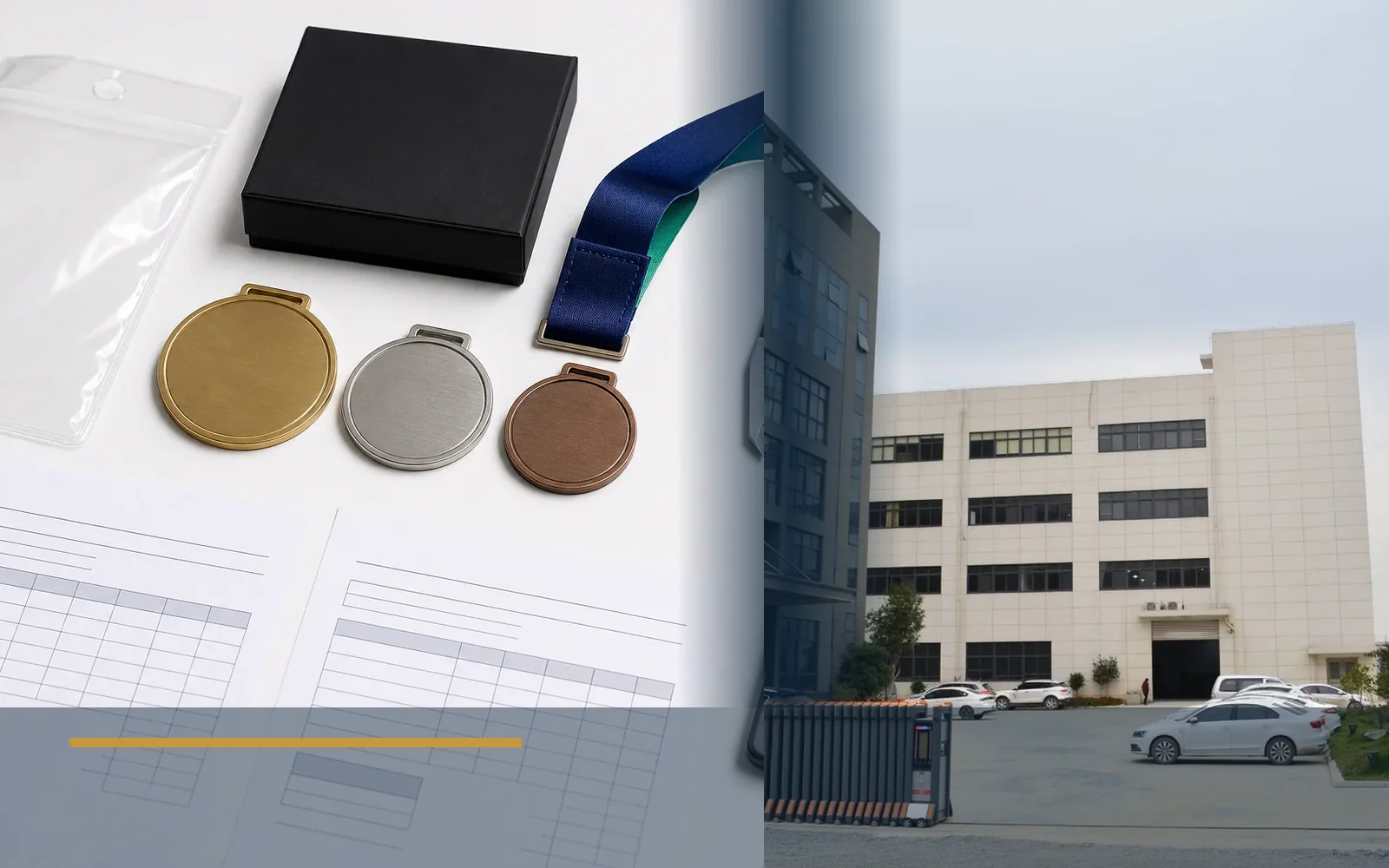
Safe payment starts before money moves. Verify who the supplier is, make sure the payee matches the documented business relationship, define exactly what will be made, and connect each payment to a written milestone. Trust should come from records you can check—not from pressure, promises or a polished quotation alone.
Why buyers hesitate
A deposit feels risky when the product does not exist yet.
In a custom project, the factory may need to create artwork, tooling, samples, plating instructions, printed ribbons or packaging specifically for one buyer. That work creates real cost before mass production begins, which is why a deposit may be requested. From the buyer’s side, however, the same payment can feel exposed: the supplier may be overseas, the finished product has not been inspected, and recovery can be difficult if the order goes wrong.
The solution is not blind confidence. It is a controlled process that makes the supplier, specification, approvals, evidence and payment instructions verifiable.
Who receives the money?
The legal entity, trading name, factory relationship and beneficiary must make sense together.
What does the deposit start?
The quote must identify the product, tooling, sample, revisions, packing and delivery scope.
What must be approved next?
Artwork, sample, production and shipment should have named checkpoints and records.
Before the deposit
Complete these 12 checks before you pay.
- Confirm the legal business identity.Request the registered company or factory name, address and the name used on the quotation.
- Check contact consistency.Compare the website domain, business email, telephone number and quotation details. Explainable differences should be documented.
- Ask for current factory evidence.Request recent workshop photos, production videos or a live video call that can be connected to the supplier you are speaking with.
- Understand the seller–factory relationship.If a brand, exporter, sales company and factory use different names, ask who signs the order, receives payment and takes responsibility.
- Verify the beneficiary before transfer.The payee should match the written commercial relationship. Independently confirm unfamiliar beneficiary information.
- Receive an itemized quotation.Separate product, tooling, sampling, packaging, inspection, freight and optional services so missing costs are visible.
- Lock the technical specification.Record dimensions, material, relief, finish, colors, attachment, packaging, quantity, tolerances and destination.
- Define artwork and sample approval.State which file controls production, what the sample includes and who can authorize a revision.
- Write the milestone schedule.Clarify when artwork, tooling, sample, production, inspection, packing and shipment are expected to occur.
- Agree on evidence and inspection.Specify the photos, videos, quantity checks, packaging checks or third-party inspection required before shipment.
- Record the balance-payment trigger.The quotation or agreement should state when the balance becomes due and what evidence precedes it.
- Plan the remedy before production.Define how shortages, defects or material differences will be assessed against the approved proof, sample and inspection standard.
Evidence in a real project
Approval records turn conversation into production control.
The examples below are real project communications supplied for this guide. Customer names and prices are hidden. They illustrate the kind of record a buyer and supplier can keep without publishing personal or commercial information.
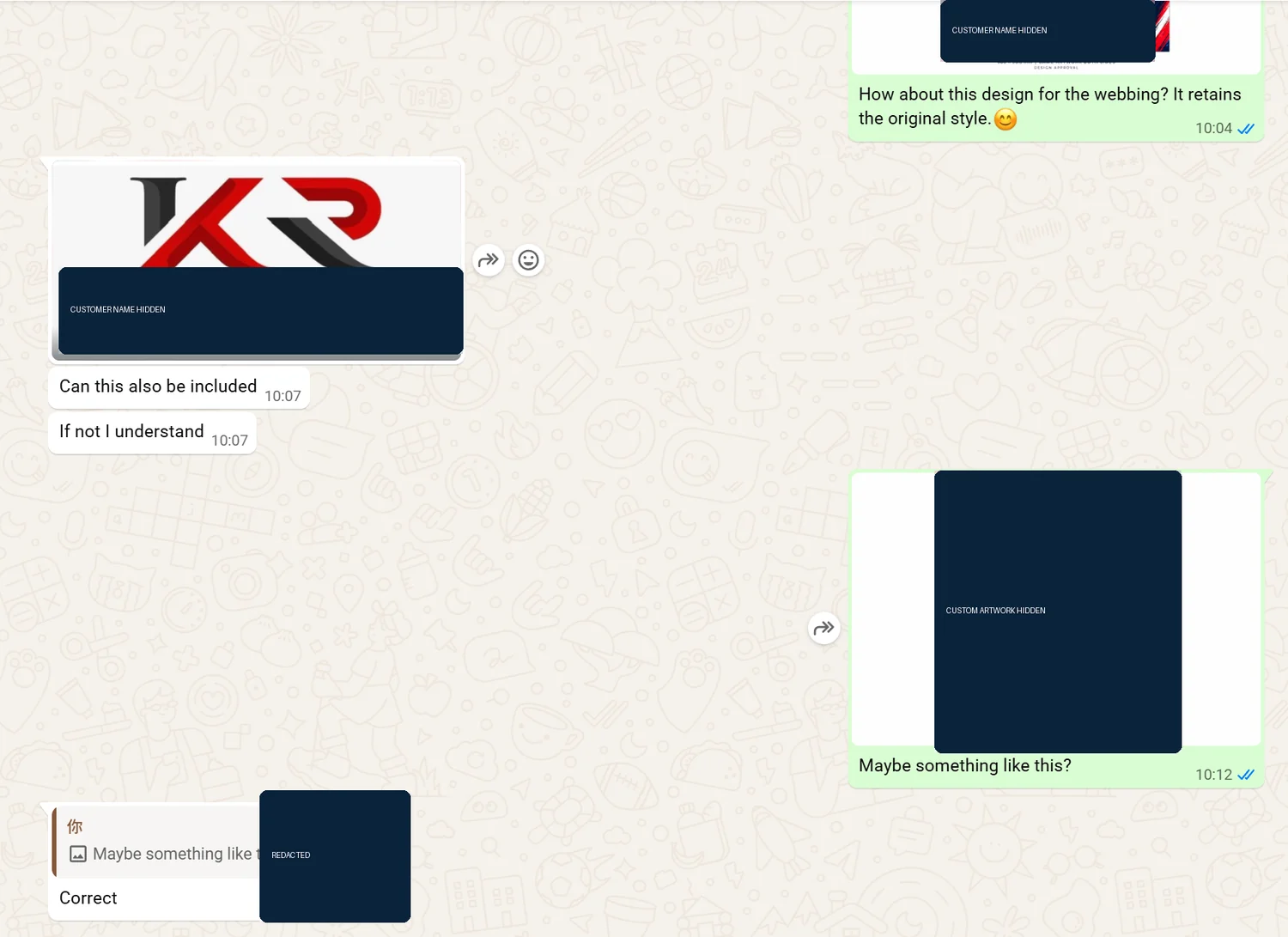
Artwork discussion records the requested addition, the proposed ribbon layout and the buyer’s confirmation.
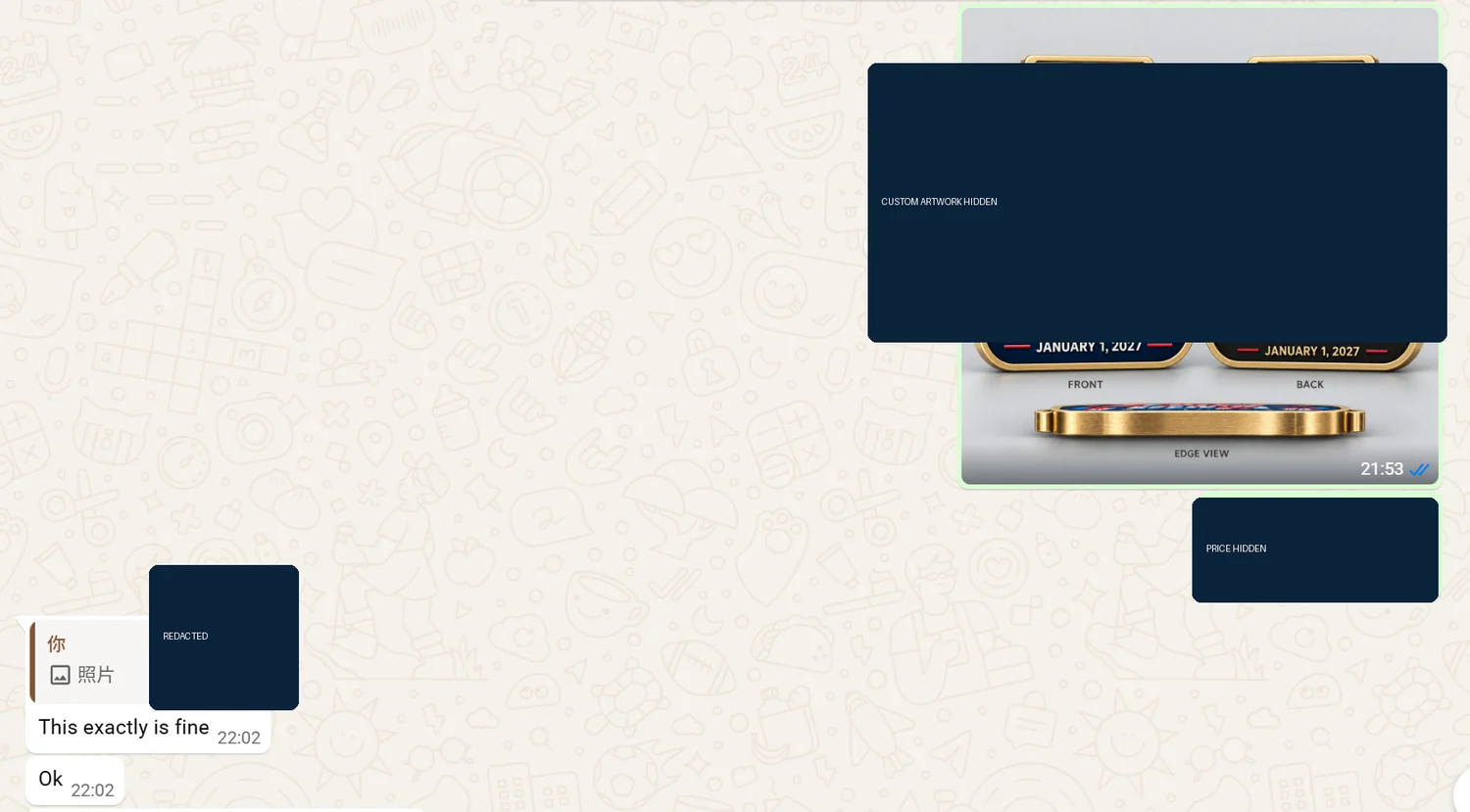
A front, reverse and edge view gives the buyer a specific visual reference before tooling or production.
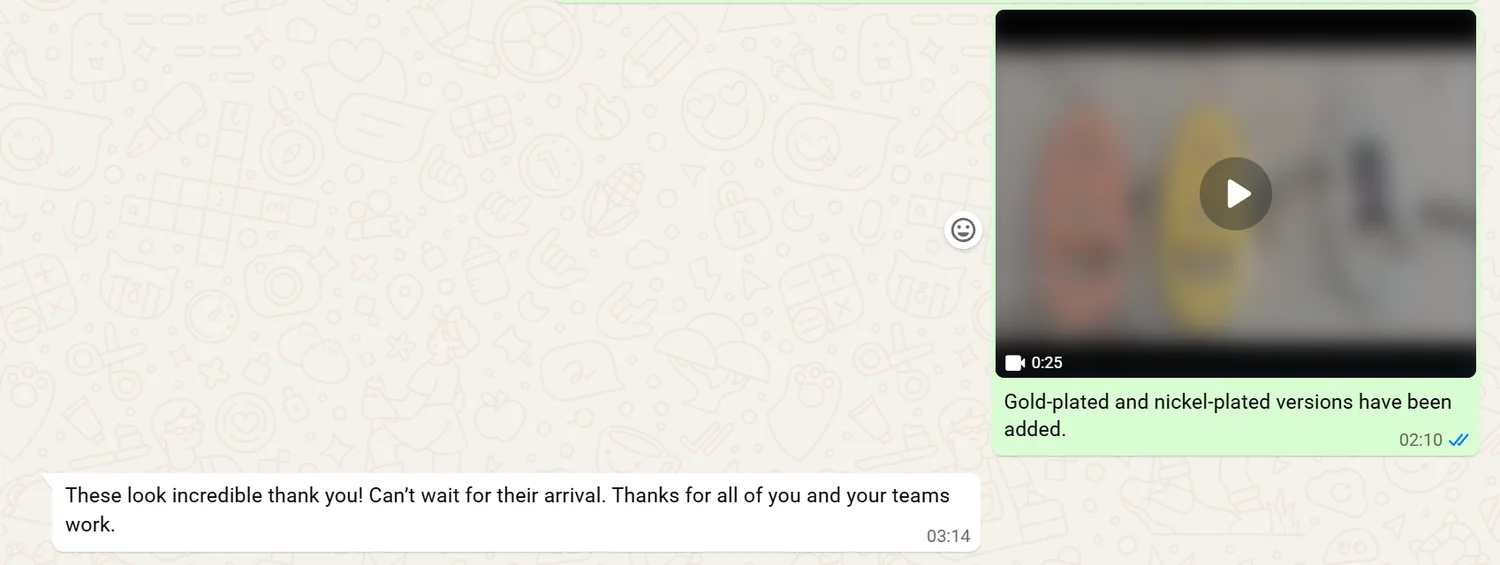
A dated sample update documents the available finishes and the buyer’s response. A message is evidence of communication, while the approved specification remains the production control document.
Payment can also leave a verifiable document trail.
The supplier issues a formal proforma invoice, the buyer returns a remittance receipt, and the supplier acknowledges the payment milestone before tooling or production begins. The examples below are authentic records with all customer, invoice, banking, address, timing and amount information concealed.
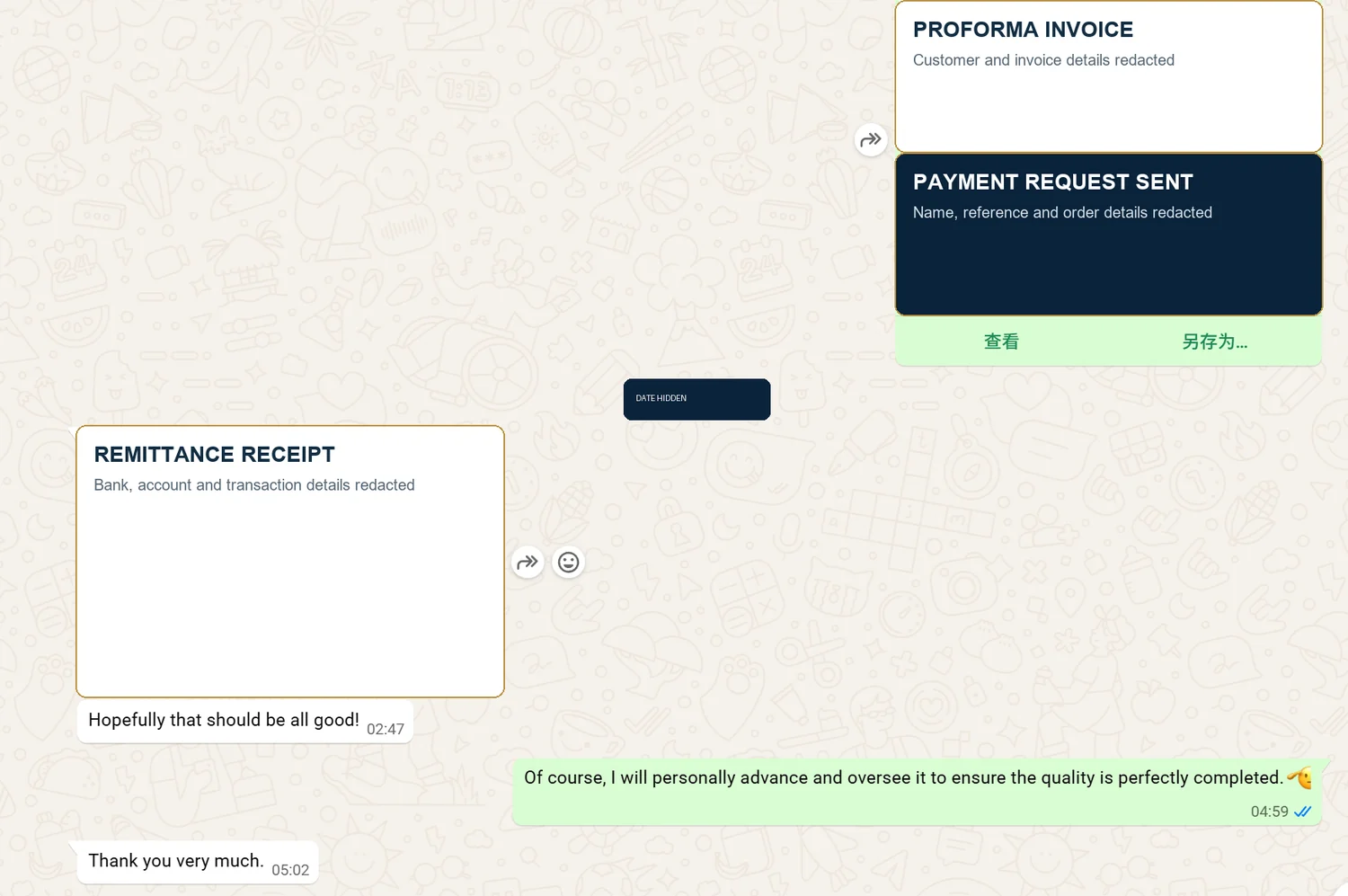
The communication sequence records that an invoice was issued, a remittance receipt was returned and the order was acknowledged for the next stage.
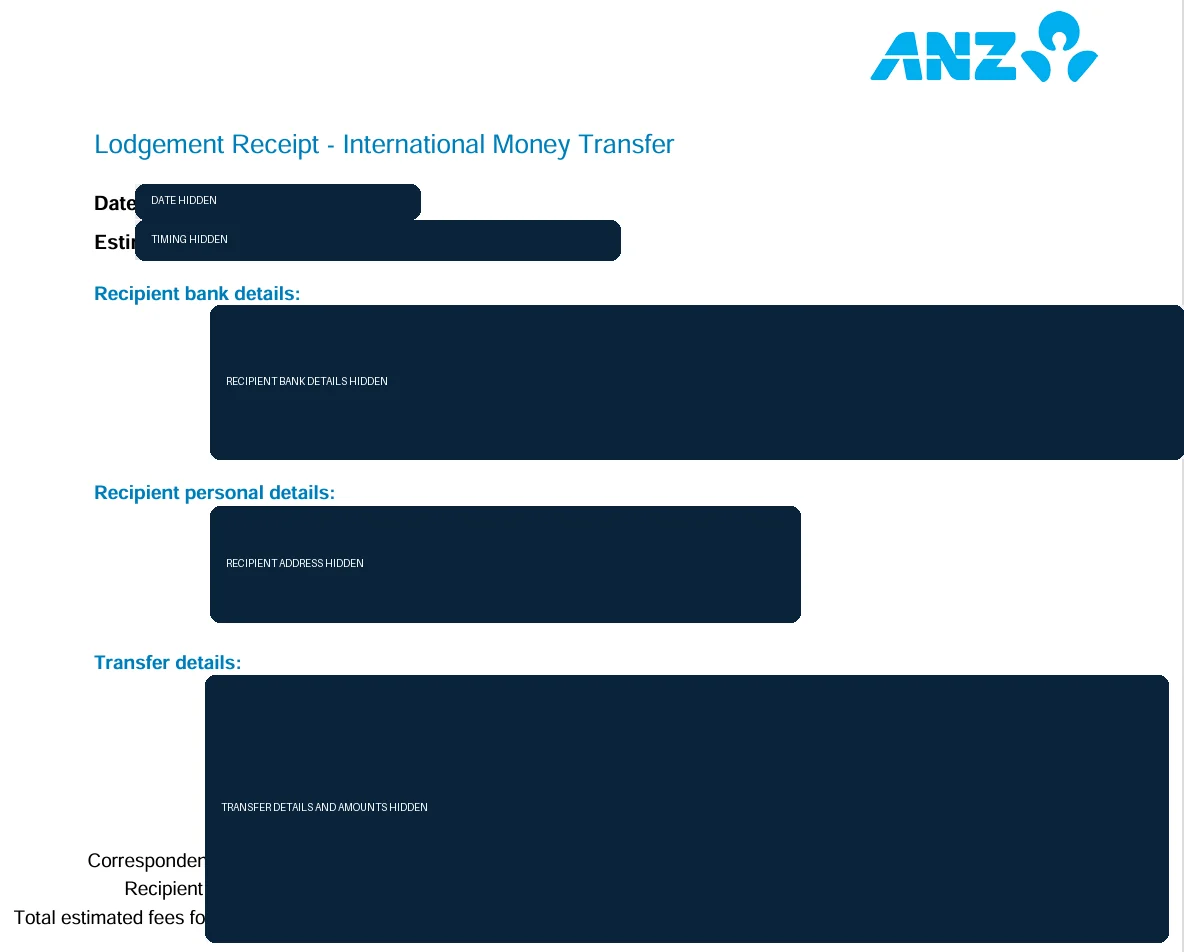
The document type remains visible while account, beneficiary, address, reference, date, timing and amount fields are permanently covered in the published image.
Extra Dream project control
How Extra Dream helps a buyer verify and control a custom order.
| Stage | What Extra Dream records | What the buyer confirms |
|---|---|---|
| Quotation | Product scope, tooling, unit quantity, accessories, packing, timing and payment terms | The commercial scope matches the request |
| Artwork | Front, reverse, dimensions, relief, colors, finish and attachment details | The controlled proof is approved for the next stage |
| Sample | Sample configuration and any differences from the intended order | Approval or a written revision list |
| Mass production | Relevant progress photos or videos and schedule updates | Any agreed intermediate checkpoint |
| Pre-shipment | Finished goods, packing, quantities and agreed inspection evidence | Inspection result and the written balance trigger |
We explain manufacturing limits before they become surprises.
A trustworthy answer is sometimes “this detail needs to change.” Small text, unsupported cut-outs, deep relief, edge thickness, enamel boundaries and attachments can affect whether a concept is manufacturable. The engineering review should explain the limitation and show the proposed solution so the buyer can approve the trade-off.
We support a smaller first order when confidence is still developing.
When the product and project structure allow it, a buyer may begin with a sample, pilot quantity or staged program before expanding. The purpose is to verify communication, approval discipline, finish and packing in a controlled scope. Any MOQ, tooling or unit-cost effect is confirmed in the quotation.
We use approved records to resolve disagreements.
If a concern appears, the discussion should return to the latest approved artwork, physical sample where applicable, written specification, inspection standard and packing instruction. Clear records help both sides separate a manufacturing difference from a buyer-requested change.
Shared responsibility
The buyer also controls part of the risk.
Provide complete and truthful requirements, identify the real deadline, appoint one approval owner and review proofs carefully. A factory cannot protect a schedule when artwork, quantities or delivery information continue changing without a revised plan. Likewise, verbal assumptions about color, weight, packaging or freight should be moved into the written specification.
For a larger or unfamiliar transaction, a buyer can also use independent company checks, references, a third-party inspection or a payment instrument suited to the risk. Availability and cost vary by country, order and supplier, so these options should be discussed before the purchase order is finalized.
Questions you can ask Extra Dream before paying
- What legal entity and beneficiary will appear on the documents?
- Which factory will produce this order?
- Can you show current workshop or product evidence?
- What exactly does the deposit start?
- Which quotation version and artwork file control the order?
- Are tooling, sample, packing and freight included?
- What must I approve before mass production?
- What production updates will I receive?
- What inspection evidence is available before shipment?
- When is the balance due?
- How should I verify any change to bank details?
- How are shortages or nonconforming goods handled?