
AI-assisted custom medal design
How to use ChatGPT to prepare a custom medal design brief.
Use AI to explore a visual direction, compare medal ideas and communicate what you want—then let the factory convert the approved concept into manufacturable artwork and relief.

ChatGPT can help a buyer describe a medal, generate or edit visual concepts and organize a clearer quotation brief. It is especially useful before formal artwork exists. However, a convincing 3D-looking picture is not a production-ready 3D model, CAD drawing or mold file. Send the chosen concept together with exact text, dimensions, quantity, finish, ribbon, packaging and deadline; the manufacturer then reviews feasibility and prepares controlled production files.
What ChatGPT can—and cannot—do for a medal project
OpenAI’s official ChatGPT learning site describes image generation as a way to explore a concept visually and move from an idea toward a proof of concept. That is a useful role in custom manufacturing: the image gives the buyer and supplier something concrete to discuss before engineering work begins.
| Useful AI output | Still requires controlled production work |
|---|---|
| Overall theme, mood and focal subject | Exact dimensions, thickness and tolerances |
| Rough shape, composition and visual hierarchy | Minimum line widths, gaps and enamel boundaries |
| Ideas for 2D, 3D or hybrid appearance | Measured relief levels and safe side profiles |
| Finish and color direction | Approved plating sample and color references |
| Front, reverse, ribbon and presentation ideas | Attachment strength, tooling and assembly details |
| Organized questions and brief checklists | CAD, sculpted production model, die or mold data |
AI images may contain inconsistent geometry, unreadable lettering or attractive details that cannot be reproduced at medal scale. Never estimate dimensions or approve spelling from the image alone.
A practical ChatGPT-to-factory workflow
The most efficient workflow separates creative exploration from manufacturing approval. Each stage should answer a different question instead of treating one image as the final design.
Define the project
Record the event, audience, purpose, quantity, delivery date and destination before choosing visual details.
Create concepts
Describe the subject, shape, finish, color, relief direction, ribbon and front or reverse requirements.
Select and annotate
Keep two to four useful images, number them and explain precisely what should stay or change.
Engineer and approve
The factory prepares feasible artwork and relief; the buyer approves controlled files and a sample.
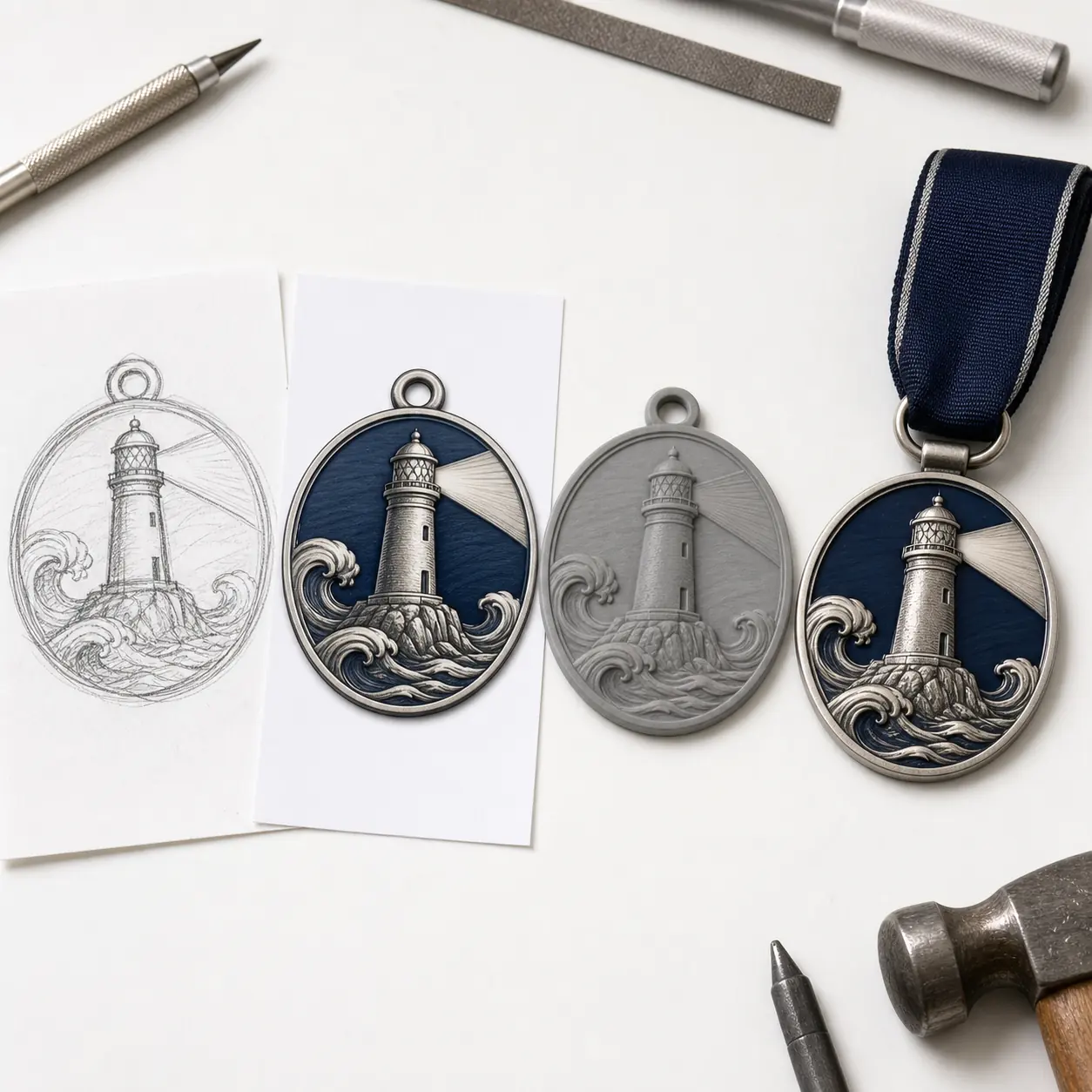
Build a prompt around product decisions
A useful AI medal design prompt is closer to a short product brief than a slogan. Include the intended medal type, finished size, composition, metal appearance, color areas, ribbon and viewing angle. Ask the model to leave wording zones blank if accurate lettering is important; provide final text separately to the factory.
- Purpose: finisher medal, school award, employee recognition, tournament medal or commemorative piece.
- Format: approximate diameter or maximum dimensions, circular or custom outline, single or double sided.
- Focal subject: one landmark, mascot, sport, symbol or anniversary idea with a clear hierarchy.
- Relief direction: flat 2D levels for logos and text, sculpted 3D volume for an organic subject, or a hybrid.
- Finish and color: antique silver, bright gold, black nickel or another direction, plus selected enamel zones.
- Attachment: practical loop, ring or bar suitable for the desired ribbon.
- Presentation: front view, three-quarter product view, white background and factory-sample lighting.
“Create a front-view concept for a 70 mm custom finisher medal. Use a custom circular outline with a lighthouse above stylized waves. Keep the event name and year as blank text zones. Use antique silver metal, selective navy enamel, clear 2D borders and one sculpted 3D lighthouse focal point. Add a 30 mm navy ribbon and a practical top loop. White background, factory sample presentation. This is a visual concept, not a production drawing. No logos or copyrighted characters.”
For more focused comparisons, request the same design with only one variable changed: antique versus bright plating, 2D versus 3D relief, one ribbon width versus another, or a round outline versus a custom silhouette. Changing everything at once makes approval harder.
Upload references carefully and explain their role
If your ChatGPT plan and organization policy allow image uploads, a permitted logo, rough sketch, event poster or previous medal can reduce ambiguity. Tell the model whether each file is a must-follow asset, a layout reference or only a mood reference. A supplier needs the same distinction.
- Must reproduce: official logo proportions, authorized crest, required wording and event date.
- May reinterpret: background texture, decorative border, waves, leaves, rays or other supporting elements.
- Reference only: a photograph showing mood, finish, ribbon arrangement or presentation angle.
- Do not copy: third-party medals, protected characters, trademarks or artwork without permission.
Only upload files that you have the right and authority to share. For confidential launches, unreleased marks or personal information, follow your organization’s privacy and AI-use rules before placing material into any external service.
What to send the medal factory
Do not send one AI image with the instruction “make this.” A better handoff includes the image plus the factual information the image cannot reliably carry. Put exact spelling in the email or quotation sheet so decorative AI lettering is never mistaken for approved copy.
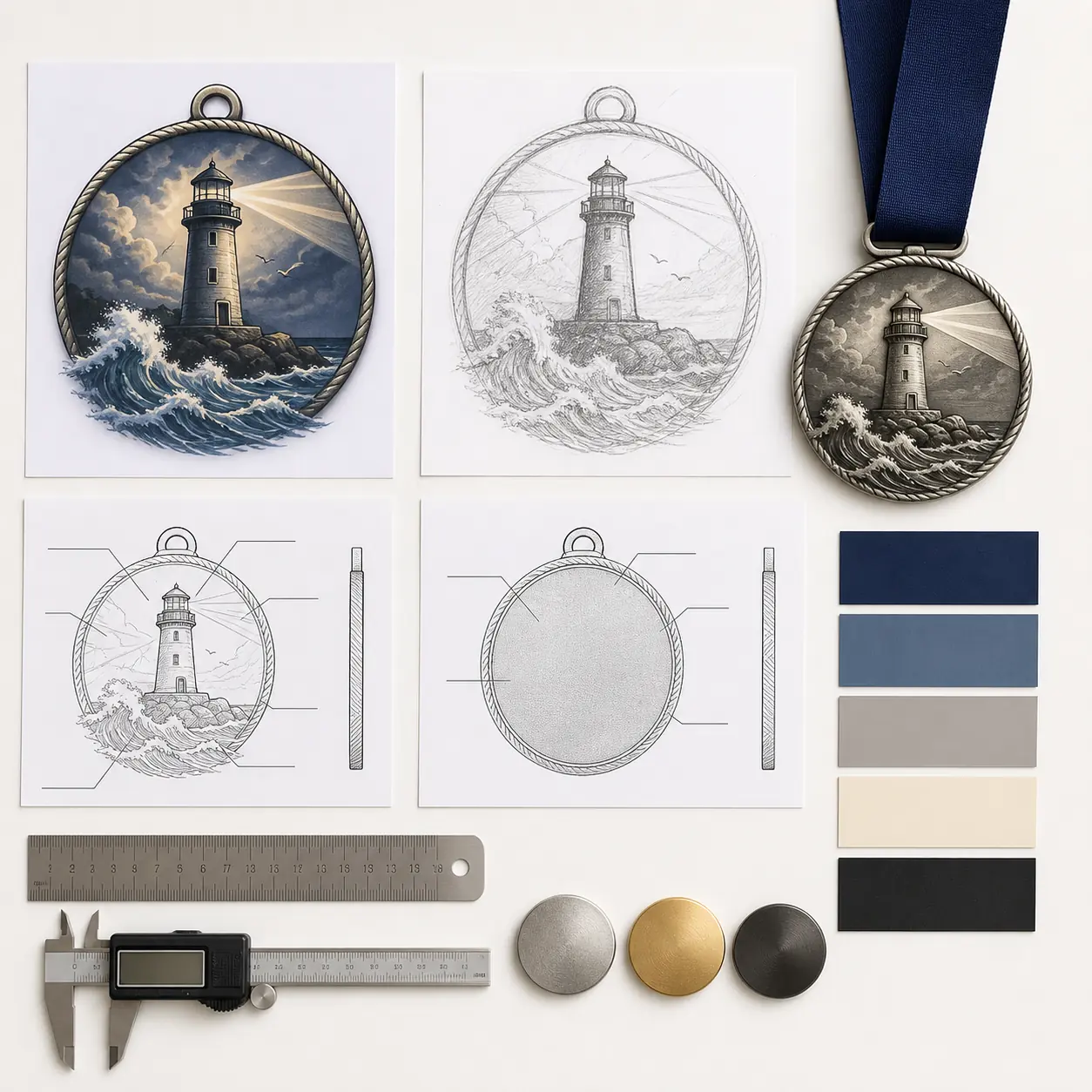
- Selected concepts: two to four numbered PNG or JPG images and the preferred direction.
- Original artwork: vector logo or high-resolution authorized source files when available.
- Exact wording: event name, date, category, sponsor text and reverse-side copy typed separately.
- Keep/change notes: identify the shape, subject, border, colors and features that are essential or optional.
- Product specification: size, thickness, front and reverse structure, material, plating and enamel direction.
- Accessories: ribbon width, length, color or print, attachment and packaging.
- Commercial details: quantity, variants, required date, destination and sampling expectation.
The custom medal order checklist can be used as the factual cover sheet. The AI images then become supporting references rather than the entire request.
A 3D-looking medal image is not a production 3D model
This distinction prevents expensive misunderstandings. An image can show highlights and shadows that suggest depth, but it does not necessarily define real surfaces. A production relief model must establish where metal rises, how curves transition, which areas remain flat and whether the shape can be tooled, plated, polished and released from the mold.
| Visual reference may suggest | Factory must define |
|---|---|
| “Make the lighthouse feel dimensional” | Highest point, base level and relief transitions |
| “Keep the border crisp” | Border width, height and distance from the edge |
| “Use dark recessed waves” | Texture, antiquing access and polishing areas |
| “Add enamel around the sky” | Metal walls, fill boundaries and feasible cavity depth |
| “Use an invisible attachment” | A practical loop, ring or bar with sufficient strength |
Read the 2D vs 3D custom medal guide before choosing a relief direction. Many strong designs combine precise 2D wording and borders with one controlled 3D focal subject.
Approve the project in layers
AI can accelerate discussion, but it does not replace the normal approval sequence. Keep each approval tied to a named file or physical sample so later changes are visible.
- Concept approval: confirm overall theme, composition and which AI reference guides the work.
- Artwork approval: verify outline, dimensions, exact spelling, logos, color zones and front or reverse layout.
- Relief approval: review 2D levels or a 3D model from front, angled and side views.
- Sample approval: inspect the physical size, weight, texture, plating, enamel, ribbon and packaging.
- Mass-production control: identify the approved sample and any allowed production tolerance before the run begins.
A clear brief can reduce avoidable revisions. It does not eliminate artwork review, tooling, sampling, production, inspection or transport. Price and schedule are confirmed only after the supplier reviews the complete specification.
Common AI medal design mistakes to avoid
- Approving AI lettering: decorative text may be misspelled or inconsistent. Supply exact copy separately.
- Showing impossible depth: deep undercuts, floating parts and paper-thin bridges may not suit the selected process.
- Using too much detail: a design that looks clear on a large screen can close up on a 50–80 mm medal.
- Ignoring the reverse: decide whether the back is blank, textured, engraved or fully designed.
- Forgetting the attachment: the loop, ring and ribbon are structural and visual parts of the product.
- Requesting copied styles: build an original direction instead of asking for another brand’s medal or a living artist’s exact style.
- Sending no selection notes: factories cannot know whether you value the subject, shape, color, relief or only the general mood.
Frequently asked questions
Can ChatGPT make a custom medal image?
It can help turn a written idea and permitted reference files into concept images or edited visual directions. Treat the result as an ideation and communication reference, not automatically as production artwork.
Can ChatGPT create a production-ready 3D medal file?
A 3D-looking image is not the same as an engineering model, CAD file or mold file. The factory still needs to review dimensions, relief heights, line widths, attachment construction, materials and tooling feasibility.
Can an AI medal image be manufactured directly?
Usually no. The preferred concept must be translated into controlled artwork and, when needed, a production relief model. Approve dimensions, spelling, relief, finish, color and a physical sample before mass production.
What files should I send with an AI medal concept?
Send selected PNG or JPG concepts, the original vector logo when available, exact wording typed separately, must-keep and must-change notes, dimensions, quantity, finish, ribbon, packaging, deadline and destination.
Can Extra Dream improve an AI-generated medal concept?
Yes. We can review feasibility, simplify weak details, separate practical relief levels, create enamel boundaries, adjust the attachment and prepare artwork for the selected process, subject to your approval.
Can I use famous characters or another company’s logo?
Only use artwork, logos, characters and reference files that you own or are authorized to use. The buyer is responsible for confirming intellectual-property and event-brand permissions.
Product and affiliation note
ChatGPT is a product of OpenAI. Extra Dream is an independent custom metal products manufacturer and is not affiliated with, endorsed by or sponsored by OpenAI. This guide explains one possible buyer workflow and does not guarantee that any generated concept is original, legally cleared or manufacturable.