
Baseball trading pins · Team planning
Custom Baseball Trading Pins: A Team Planning Guide
Plan the quantities, team identity and arrival date for a pin your players can exchange and collect.
For a coach or team parent, trading pins are one more item to organize alongside uniforms, travel and the roster. A clear plan helps the team recognize its design, gives players pins to exchange and gets the order into the right hands before departure.
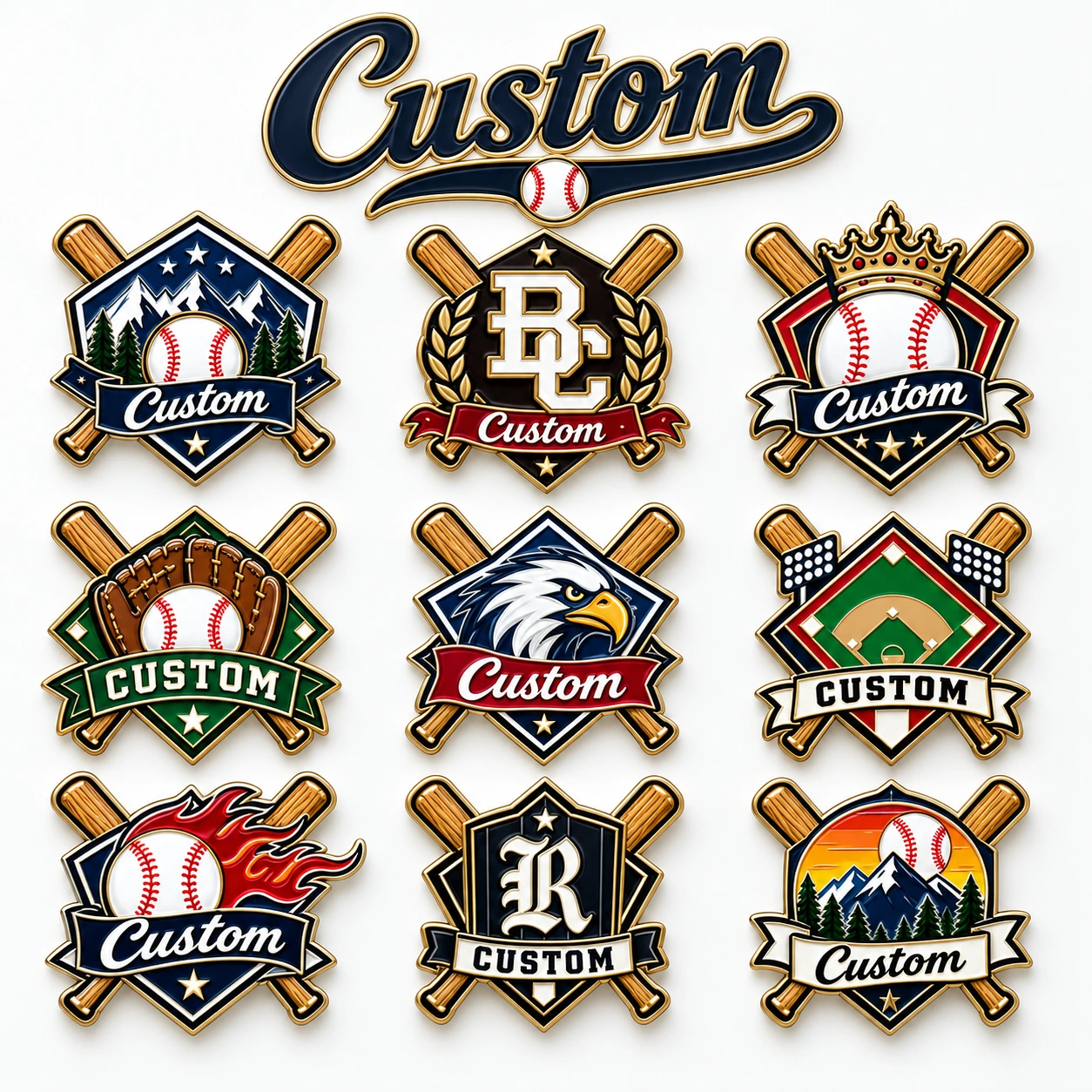
What are baseball trading pins?
Teams bring their own pins, usually featuring a name, logo or local identity, for players and others to exchange and collect. Check your event’s current schedule to see who can trade and when. Cooperstown Dreams Park’s pin-trading FAQ, for example, describes trading by players, siblings and others and suggests unwrapping and dividing pins among players before arrival. Use the instructions for your own event when planning.
1. Calculate the team’s actual requirement
Count player trades, other gifts, team keepsakes and reserves separately. Subtract only stock that is suitable for this event and not already allocated elsewhere.
If the result is below zero, use zero as the net requirement.
Here is a hypothetical calculation to show how the formula works. Actual needs vary by team and tournament.
| Purpose | Calculation | Pins |
|---|---|---|
| Player trades | 12 players × 30 pins | 360 |
| Coaches, supporters and other gifts | Combined | 40 |
| Team keepsakes | Combined | 16 |
| Reserve | Combined | 24 |
| Usable stock | Subtract | −20 |
| Net requirement | 360 + 40 + 16 + 24 − 20 | 420 |
The requirement is a starting point for ordering. Our pin product page lists a standard minimum of 500 pieces per design. In this example, a team could discuss a 500-piece order and decide whether the 80 additional pins would suit extra trades, gifts or a future event. For a league or several teams, send each design and its quantity so we can assess the production arrangements for that project.
2. Make the team recognizable at a glance
Give the team name, initials or approved logo the strongest visual position. Then add a team color, mascot, baseball detail or hometown element that makes the pin easy to recognize. A tournament name or year can make it a keepsake; leaving the date on a backing card instead may allow unused pins to serve another event.
View the artwork at actual size. If tiny stitching, lettering or silhouettes blur together, simplify the linework or discuss printed details alongside enamel-filled areas. Send editable artwork and color references and check spelling in the proof. Our bulk pin ordering guide explains the rest of the quotation and approval process.
Project example: eight teams, one coordinated pin series
A Japanese youth baseball league organized trading pins for eight teams. Each team had its own design, with 300 pins per design and 2,400 pins in total. The initial brief called for the same size across all eight designs, imitation enamel across the faces and standard butterfly clutches.
During artwork review, we noticed that baseball stitching, bat outlines and player silhouettes contained fine details that could be difficult to reproduce as small filled areas. The players planned to wear the pins on lightweight, quick-dry jerseys and remove them frequently for trading. Catching these potential concerns during review let us adjust the construction before production.
We kept the main color areas in polished imitation enamel and used UV printing with local clear doming for particularly fine details. A consistent outer size helped the collection look related, while team colors made the individual designs easier to identify. The backing changed to a short post with a rubber clutch for the intended wearing context. Check a sample on the actual fabric: fabric thickness, post length, placement and the clutch all affect comfort and retention.
Representatives of each team approved the samples before production. The pins were exchanged and worn during the event, and the reported feedback was positive.
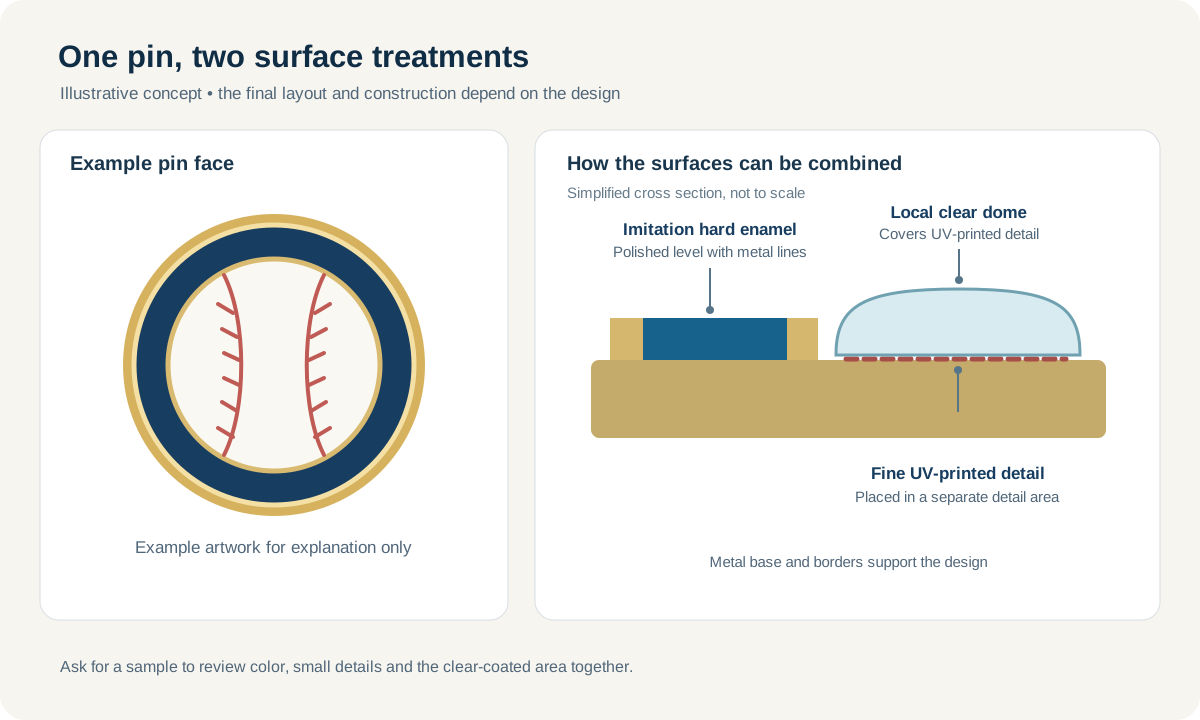
What this means for your team: settle the shared size and layout, distinguish each team clearly, then review color areas, fine details and backing together in the sample.
3. Decide how many versions the team needs
One design is straightforward to distribute and reorder. Several designs or colorways give players more variety, but each requires its own proof, quantity and packing identification. List the quantities separately when requesting a quote.
A dangler adds a hanging element; a slider or spinner can introduce movement. If one suits your design, discuss the attachment, available options, cost and how it will be worn or stored before finalizing the artwork. A readable team identity still comes first.
4. Work backward from the in-hand date
Start with the date the team parent or coach needs the pins, leaving time to count and distribute them before departure. Then work backward through delivery, production, samples and artwork approval.
| Stage | What to confirm |
|---|---|
| Distribution | Who receives the shipment, divides the pins and holds the reserve? |
| Shipping | Destination, delivery method, customs and the required receipt date. |
| Production and inspection | Artwork and quantity for each version, packing and any sorting labels. |
| Proof and sample | Spelling, colors, construction, backing, feedback and final approval. |
| Brief and quote | Team contact, quantity by design and the latest acceptable delivery date. |
Timing depends on the design, sample route, production schedule and destination. Give your supplier the in-hand date so the project can be scheduled around it. If the deadline is close, lock the wording and main design first, then assess any extra versions or moving parts.
5. Match the backing and distribution to how pins will be used
Players may carry their collections on pin trading towels, in pin bags or binders, on lanyards, hats or bags. A standard butterfly clutch is one option for a light pin; for a heavier design or one that tends to rotate, discuss post placement and whether more than one post is appropriate. Try the sample on the intended material. Our pin backing guide compares common options.
Before the event, count and divide the shipment by player, then set aside gifts and reserves. If you unwrap pins in advance, decide how to keep the clutches secure and follow the event’s own guidance.
Copy a brief for your team
Share the design, breakdown and deadline together so the quote can reflect how the pins will actually be used.
Baseball trading pin project brief
Team / city: [ ]
Tournament or event: [ ]
Players: [ ]
Pins per player: [ ]
Other gifts: [ ]
Team keepsakes and reserve: [ ]
Usable stock: [ ]
Estimated net requirement: [ ]

Designs and quantity per version: [ ]
Artwork, team colors and wording: [attached / to follow]
Target size, finish, backing and optional features: [ ]
Packaging and sorting requirements: [ ]
Destination and required in-hand date: [ ]

Please review the quantities for each design and provide a quote, sample and approval options, packing, shipping and a proposed schedule.
Plan your team’s trading pins
Share your artwork, quantity for each design and in-hand date. We can discuss the fine details, backing and production plan together.
Discuss your custom pinsQuestions before ordering
Does every player need the same number of pins?
Not necessarily. Set a base around your event and budget, then plan separately for coaches, family and reserves. Agree the distribution with the team before the order.
Should the year appear on the pin?
A year adds context as a keepsake. Omitting it may help the team use suitable remaining pins later; a backing card can carry event details instead.
Can we order different team designs or colors?
Send each design and its expected quantity for review. Production conditions, quotation and timing are confirmed for the specific project.
Source
Cooperstown Dreams Park: Pin Trading FAQ. Its event-specific guidance is a starting point; check current details with your tournament.