
Enamel pin buying guide / Attachments
Enamel Pin Backing Types Compared
Rubber, butterfly, locking or magnetic? The best backing is the one that fits the fabric, the pin and the moment when someone actually wears it.
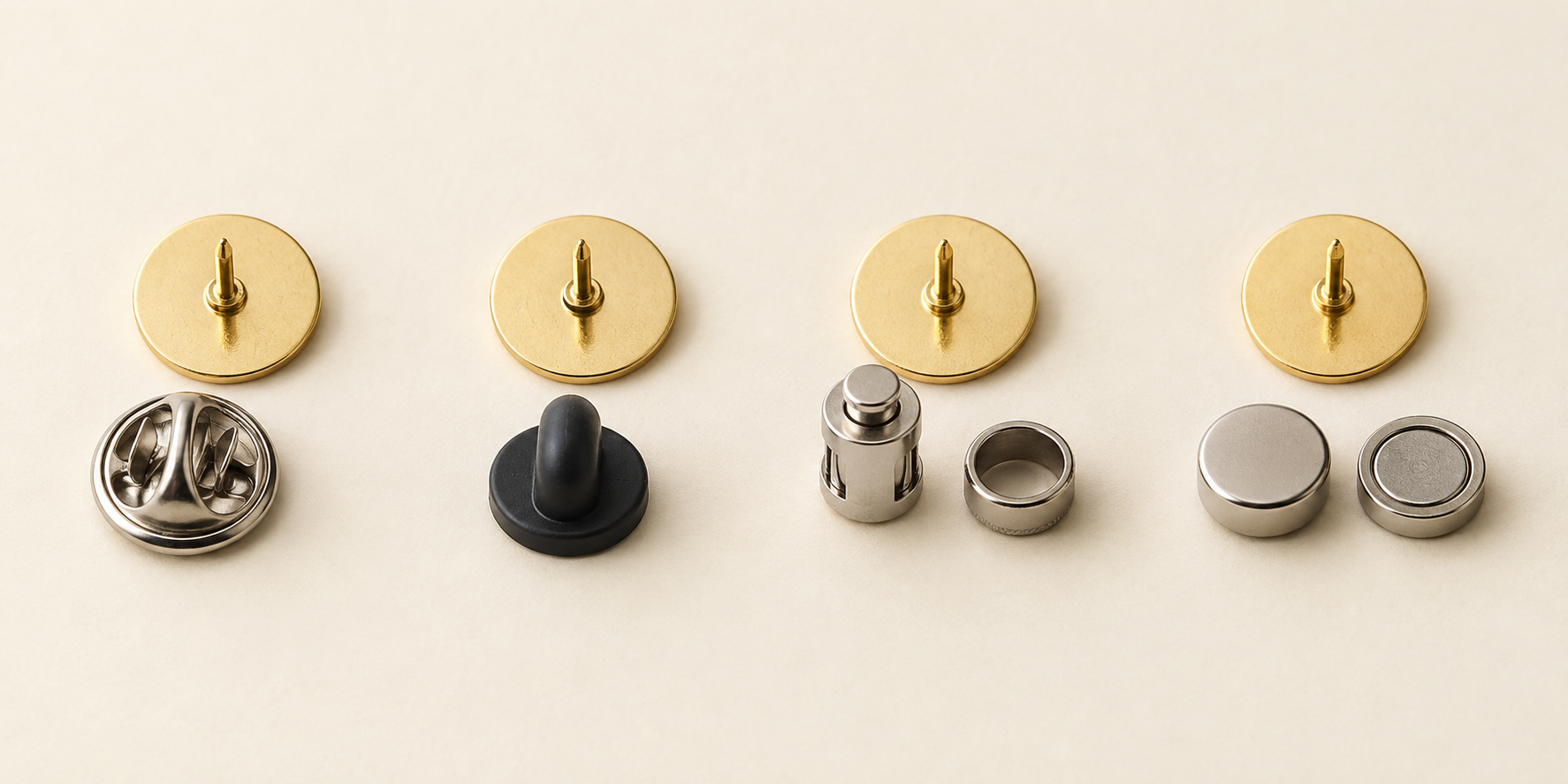
Imagine two buyers approving the same pin face. One is ordering 2,000 inexpensive conference giveaways. The other is making a small retail edition that collectors will attach to backpacks. The artwork can be identical while the right backing is completely different.
The front wins attention; the attachment decides how the pin feels, how it sits and how confidently it can be worn. Choose it before the final sample, because the post position, packed thickness and assembly service all depend on that decision.
Rubber clutch
A rubber clutch pushes onto a post and gives the wearer a soft, low-profile contact point. It is worth considering for everyday merchandise, shirts, caps and pins whose back may touch the body.
Color can become part of the presentation, but confirm what colors are stocked and whether alternatives change price or timing. Grip can vary with the clutch, post and repeated use, so never describe a push-on back as impossible to lose.
Explore it for: comfort, simple handling and coordinated retail presentation.
Butterfly clutch
The familiar metal clutch releases when its two wings are squeezed. Buyers often recognize the mechanism immediately, making it a practical option for uniforms, promotions and general lapel pins.
The feel and holding performance depend on the actual components, not the name alone. Check that the clutch engages cleanly and that the post does not protrude uncomfortably in the intended use.
Explore it for: familiar operation and conventional metal presentation.
Locking clutch
A locking style is chosen when retention matters more and the buyer accepts a larger or more deliberate release mechanism. It can suit collectible pins, bags and recognition pieces that owners would be especially disappointed to lose.
“Locking” is a category, not a guarantee. Mechanisms differ, and no attachment makes a pin immune to damaged fabric, a bent post or a severe snag. Ask how the proposed version is released and test the exact sample.
Explore it for: higher-value pieces and uses where extra retention is worth added bulk or cost.
Magnetic backing
A magnetic system can hold a pin without piercing the garment. That makes it attractive for suits, presentation clothing and situations where the wearer wants to avoid a needle hole.
Its holding force depends on the magnet system and the thickness and construction of the material between the parts. A thick coat, movement or a snag can change the result. Test it on the real garment rather than assuming every magnetic back performs alike.
Explore it for: temporary wear on garments where avoiding puncture is a priority.
Choose by the job, not by habit
| Buyer situation | Start by comparing | Question for the sample |
|---|---|---|
| Staff uniform or event giveaway | Rubber and butterfly | Is it quick to fit and comfortable through a normal shift? |
| Collectible pin on a bag | Locking, plus post layout | Does it remain stable when the bag moves or catches? |
| Suit or formal presentation | Magnetic and compact clutch options | How does it sit on the actual fabric? |
| Wide or tall artwork | Two posts with suitable clutches | Does the pin resist rotation without crowding the back? |
This table is a starting brief. Available hardware, terminology and performance vary; the approved sample controls the order.
One post or two?
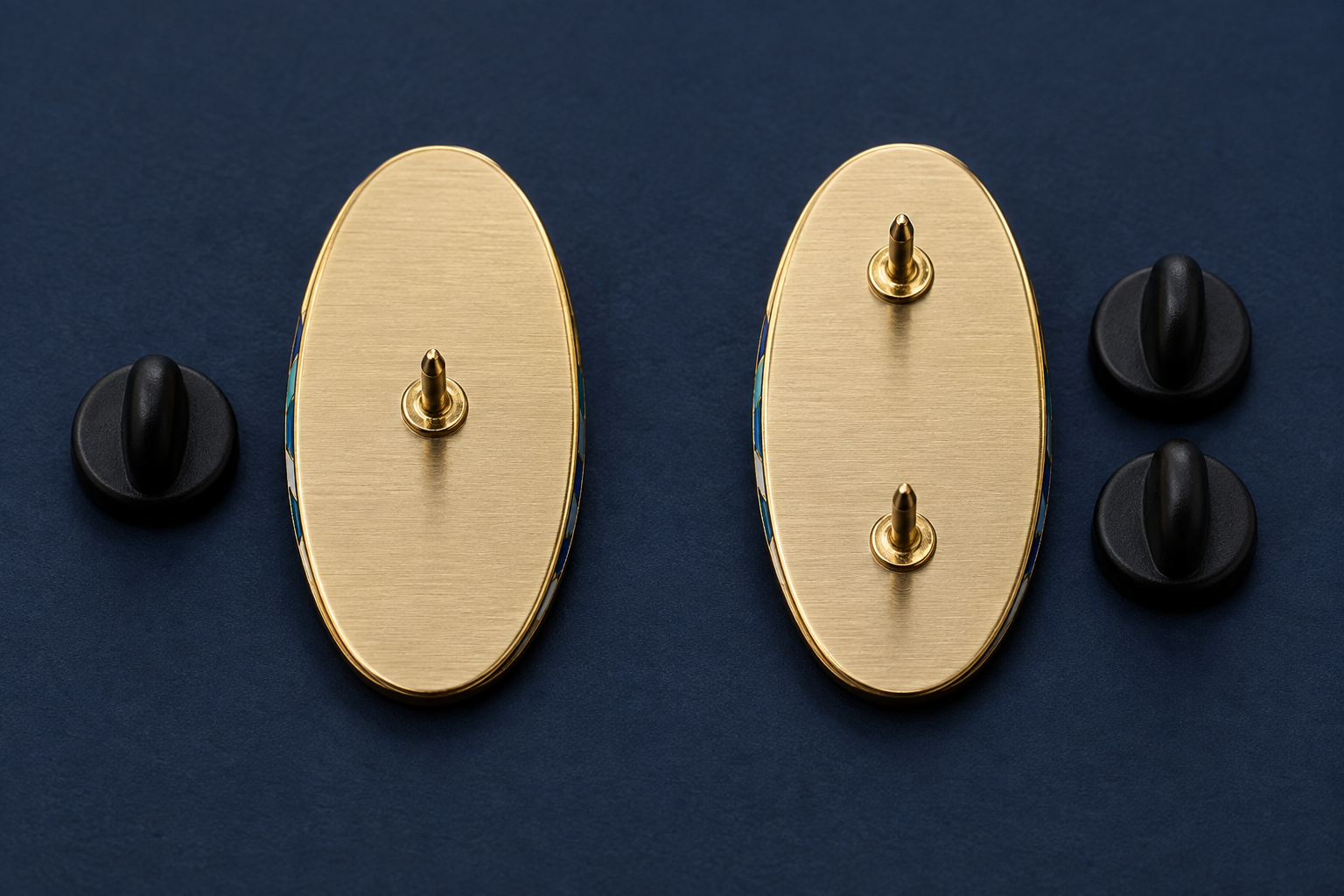
The number of posts changes how the pin behaves
A single post can work neatly for a compact, balanced pin. On a long wordmark or tall character, however, the face may rotate around that point. Two separated posts can help control orientation and distribute support.
More hardware is not automatically better. A second post adds another hole in the garment and another clutch to mount during packing. Poorly placed posts can also make the pin awkward to attach. Ask the factory to mark their positions on the production proof and inspect the complete back of the sample.
Material changes everything
Test the pin where it will live
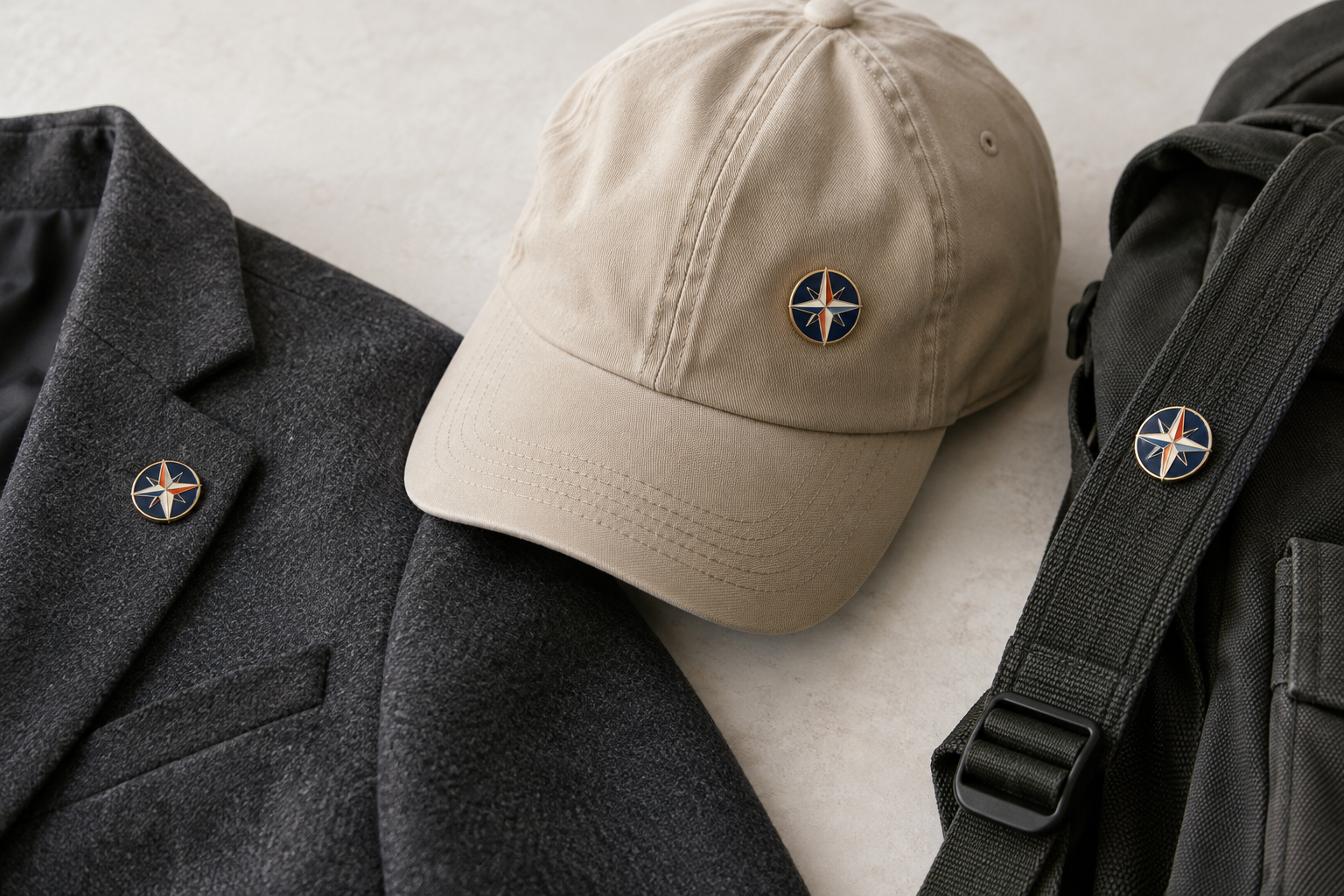
A wool lapel, cotton cap and canvas bag strap differ in thickness, movement and how close the back sits to the wearer. The same clutch may feel discreet on one and bulky on another.
Make a short use test part of approval. Attach and remove the sample several times, move the garment naturally and check whether the pin rotates, pulls the fabric or leaves an unsuitable profile. For a retail product, repeat the check after mounting it on the intended backing card or packaging.
What should appear in the quotation?
Do not send “standard backing” and assume both sides mean the same thing. Name the requested type, quantity per pin, finish or color when relevant, and whether the order includes mounting. For a two-post pin, state that two clutches are required per piece.
A useful line might read: “Please quote 500 pins with two black rubber clutches per pin, mounted on printed cards and individually bagged. Mark both post positions on the proof and provide one fully assembled sample before bulk production.”
If you are comparing suppliers, keep the backing and assembly specification identical. A quotation with loose butterfly clutches is not equivalent to one with locking backs already mounted and packed.
Four questions before approval
- Where will the pin be worn?
- Does the wearer value comfort, familiar handling, extra retention or no puncture?
- Will one post keep the artwork upright?
- Is the quoted order loose, mounted or fully packed?
Build the whole pin
Send the artwork and wearing context together.
Share the size, quantity, intended garment or product, attachment preference and packaging. We can review the pin as an assembled item.