
Custom Challenge Coin Cost: Pricing & Budget Options
Build a budget around a defined specification, then compare the changes that preserve the design’s purpose. A real project shows how thickness, relief and surface choices work together.
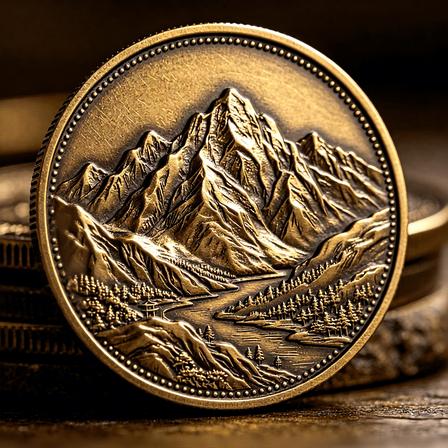
What determines the price of a custom coin?
Custom challenge coin pricing depends on dimensions and thickness, artwork on both faces, finish, quantity per design, packing and delivery requirements. Begin with a comparable specification, then request a quotation for your artwork and actual quantities.
For example, a 50 mm zinc-alloy relief coin in Extra Dream’s reference collection has an estimated unit price of US$1.90 at 500 pieces. An 80 mm design with deep relief, real gold plating and clear doming is a different specification.
When an initial proposal exceeds the budget, first identify which effects must stay and which details can change. That gives the supplier a useful basis for recommending another version.
Use a reference price with its specification attached.
The following example is the Institutional color coin in Extra Dream’s reference collection: zinc alloy, 50 mm diameter × 3 mm, relief emblem, silver-tone finish and enamel colour, with an individual bag.
| Quantity of one design | Reference price per coin |
|---|---|
| 500 pieces | US$1.90 |
| 1,000 pieces | US$1.76 |
| 3,000 pieces | US$1.27 |
Shipping is quoted separately. View the item and customisation options in the product reference collection, then send your front-and-reverse artwork so the dimensions, process and packing can be confirmed for a project quote.
Start with the confirmed unit price multiplied by quantity per design. Check which artwork, tooling, sample, packing and transport costs are already included and which are separate, counting each cost once.
Which choices change challenge coin cost?
Swipe sideways to compare the specification choices.
| Choice | What to specify | What to compare |
|---|---|---|
| Diameter and thickness | Actual dimensions and the desired feel | Two thickness samples, checking space for important lettering and relief |
| Relief on each face | Where depth is important and which patterns are supporting detail | Preserve the main identity and assess simplification of secondary reverse details |
| Colour and printing | Colours, photographs or gradients on each face | Separate essential brand expression from optional decoration |
| Metal finish | Real gold plating, a gold-tone appearance or another finish requirement | Actual samples of the proposed finishes |
| Doming and extra processes | Whether a clear raised coating is needed, where it goes and why | Appearance and use requirements with or without that layer |
| Packing and delivery | Bags, capsules or boxes, labels, destination and required arrival date | A package that fits the handover and distribution plan |
The same logo can be produced with different thicknesses, relief levels and surface combinations. Put the chosen conditions into one specification sheet when comparing offers. See the challenge coin size guide and manufacturing process for the connection between artwork and production.
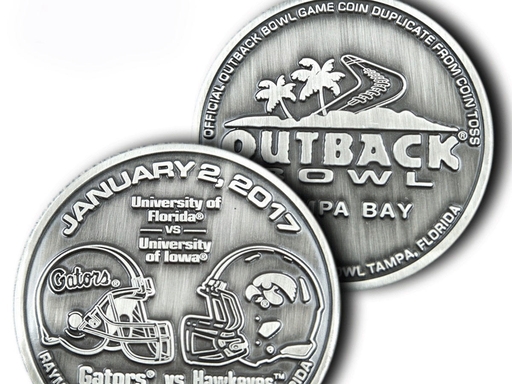
A 500-piece, 80 mm coin project with four budget changes.
A gift distributor in Malaysia was sourcing challenge coins for corporate commemorative events. The first proposal combined an 80 mm zinc-alloy body, 3 mm thickness, deep relief on both faces, real gold plating and a full-face clear resin dome.
Together, those requirements exceeded the project budget. We separated the design into essential brand elements and details that could be compared in another specification. The display diameter and core identity stayed, while thickness, reverse detail and the surface combination were reconsidered.
Swipe sideways to compare the original and adopted specifications.
| Item | Original proposal | Specification adopted |
|---|---|---|
| Quantity and diameter | 500 pieces, 80 mm diameter | 500 pieces, 80 mm diameter retained |
| Thickness | 3 mm | 2 mm |
| Metal finish | Real gold plating | Imitation-gold plating |
| Clear surface layer | Full-face resin dome | Doming removed |
| Reverse relief | Deep relief with complex patterns | Simpler, shallower relief retaining the main identity |
The customer compared the samples and accepted the revised gold tone, the feel of the 2 mm body and the clarity of the important artwork. The order was placed using the revised specification.
With the same treatment of tooling, packing and freight in both costings, the revised specification lowered project cost by about 44%. The distributor subsequently promoted this version as a budget option for local corporate customers.
The useful decision was to retain the 80 mm presentation size and core identity, while adjusting the body, reverse pattern and finish combination. Ask for the original and revised specifications side by side so you can see what each preserves and changes.
What do you give up when a process changes?
The revised specification suited this customer because the samples established an acceptable feel, colour and relief. Review each change against your own purpose.
Thickness affects the feel.
A 2 mm coin is thinner than a 3 mm version. If weight in the hand or substantial relief is central to the brief, keep a thicker sample in the comparison. Acceptance of this 2 mm design does not establish how every material, diameter or artwork will feel.
A gold-tone effect and real gold plating are different specifications.
If the purchasing requirement calls for real gold plating, retain it in the quote and sample approval. Where the priority is the visual gold tone, compare actual finish samples. The metal finish guide helps you prepare that discussion.
Removing doming removes that clear raised surface.
Check whether its gloss, feel or coverage is part of the intended effect. A visible metal relief and a transparent domed finish give different surface experiences. DuraTech’s process overview illustrates full and selective coating applications; decide the coverage around your own artwork.
Shallower relief changes the sculpted depth.
If portraits, architecture or detailed patterns are central to the theme, review the simplified artwork before accepting it. A reverse dominated by a logo and short wording may be a useful place to assess a clearer, simpler layout.
Compare unit price and the complete commitment.
Request prices for realistic quantities of the same design, such as 500, 1,000 and 3,000 pieces. Higher volumes can spread preparation work and receive different production quotes, but the decision also involves total spend, stock and reorder plans.
Extra Dream’s standard minimum is 500 pieces per design. List each front-and-reverse version, year or department variant and identify shared elements, so production options and quotation scope can be assessed.
Tooling, samples and other preparation work may be included or shown separately in the project quote. Compare the complete amount on the same basis, along with the conditions for artwork changes and future repeat orders.
Check six lines before choosing an offer.
- Physical specification: diameter, thickness and material.
- Both faces: relief, lettering, colour and edge treatment.
- Metal finish: the named finish, actual requirements and approval sample.
- Quantity and versions: quantity per design and treatment of variants.
- Packing and delivery: the package, destination and required receipt date.
- Included costs: tooling, samples and other items already covered or listed separately.
When the initial proposal exceeds the budget, request one version retaining the original requirements and a second showing only the changes you agree to assess. Compare the difference in price alongside the difference in specification.
Ask for a project quote with a clear basis.
We need [quantity per design] custom challenge coins for [event or organisation purpose].
Proposed dimensions: [diameter × thickness]. Front-and-reverse artwork is attached. Please retain [essential logo, wording, relief or finish].
Packing: [individual bag / capsule / presentation box / recommendation requested]. Delivery to [country and postal code], required by [receipt date].
Please state the unit price, complete order amount and included costs. If the original specification exceeds the budget, list a revised option, its changes, the price difference and the effects to confirm on a sample.
Send the artwork, quantity per design and arrival requirement so we can discuss a specification around the actual project.
Frequently asked questions
Why can the same artwork receive very different prices?
Artwork alone may not define thickness, material, both faces’ relief, finish, packing or included costs. Align those conditions before comparing the offers.
Which saves most: a thinner coin, simpler reverse or no doming?
Compare the actual design, quantity and original process combination. The case result came from several changes together and cannot be assigned to one operation. Identify the essential effects first, then request comparable alternatives.
Is ordering more always better value?
Compare the unit price and total spend. A larger run is worth quoting where demand for the same design is stable; changing quantities or versions also require consideration of stock and future orders.