
Company identity · Branded gifts · Bespoke metal products
Custom corporate metal gifts: logo branding vs bespoke design.
Should your brand sit on a standard gift—or help shape the gift itself? Choose the level of customization around what you want the product to express.
Many corporate gift projects begin the same way: choose a keyring, pin or bottle opener, then add the company logo.
There is nothing wrong with that approach. For exhibition giveaways, everyday promotion or a one-off event, a suitable product with clear branding may do exactly what you need.
But a gift can also do more than identify who sent it. It can recall the company’s product, industry or distinctive character. That is where a bespoke design becomes worth considering.
The difference is not how large the logo is. It is whether the brand is applied to the product—or helps determine what the product looks like.
1. Logo branding and bespoke design start in different places.
Logo decoration starts with an existing shape and construction. The company mark, wording or artwork is added within the available decoration area.
Bespoke design starts with the company’s own visual assets. The outline, artwork and raised or recessed details are developed around those assets; the structure may also be adapted where the project calls for it.
Examples might include a metal keyring based on a signature product, an enamel pin shaped around a mascot, or a commemorative coin with a recognizable headquarters building in relief. These are concept directions, not claimed customer projects.
| Decision | Logo on a standard item | Bespoke brand design |
|---|---|---|
| Starting point | Select the item, then place the brand. | Identify the brand element, then choose the form. |
| Design scope | Decoration within the existing item’s limits. | Evaluate custom outline, artwork, relief and construction. |
| Recognition | Mainly through the logo or company name. | Through the logo and the product’s own visual identity. |
| Typical purpose | Everyday promotion, giveaways or practical gifts. | Brand merchandise, important milestones or distinctive client gifts. |
This is not simply a choice between “basic” and “premium.” Choose according to the job the gift needs to do.
A standard round or shield outline can still carry a distinctive custom design. A round coin with original relief may express a brand better than a complicated shape with little connection to the company.
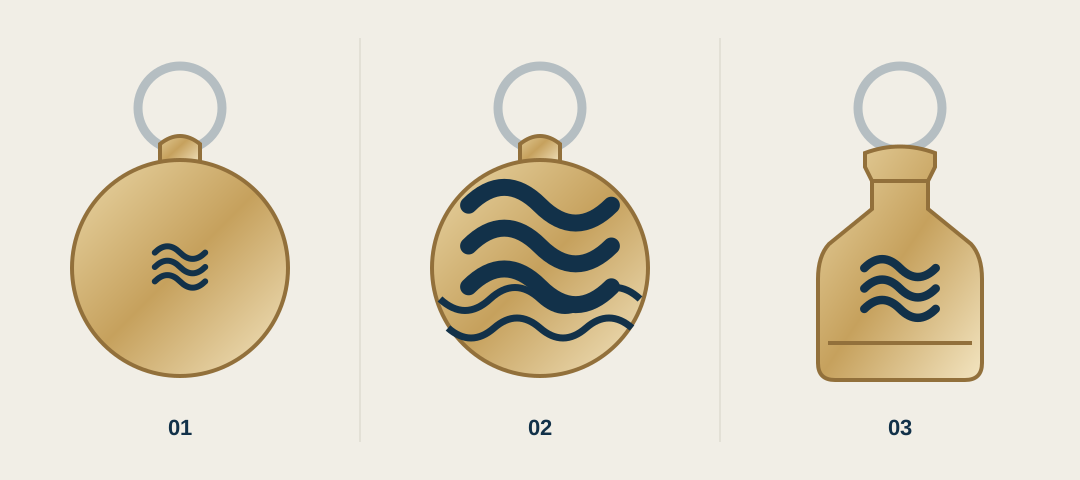
2. Look beyond the logo for a useful design starting point.
When every idea begins and ends with the logo, the result can be the same round plate with a different company name. Your company may have more distinctive assets to work with.
The outline of your own product
A vehicle, vessel, machine, beverage bottle or distinctive consumer product can provide a starting point. The aim is not to shrink a complete product photograph onto metal. Extract the silhouette or component people recognize most easily.
An equipment company could explore a keyring based on a machine’s side profile. A beverage brand could develop a bottle opener around its bottle silhouette or signature label. Each is a design possibility to evaluate, not a promise that any geometry will work.
A mascot or brand character
A character’s outline, expression and signature colors can carry recognition. For a small pin, preserve those defining features rather than every line in the original illustration.
A building, place or company origin
A headquarters building, factory frontage or founding location can make an anniversary coin or badge more specific. It connects the milestone to the company’s actual story rather than relying only on an anniversary number and logo.
Your established visual language
Not every company has a mascot or a recognizable product silhouette. Letter combinations, geometric forms, patterns and an established color palette can still create a coherent design.
The goal is not to add more brand colors. It is to make shape, artwork and color communicate the same idea.
3. Match the metal product to the brand message.
Decide what you want to express before choosing a pin, coin, keyring or opener. That is usually more productive than selecting a catalogue item without a clear purpose.
Enamel pins: characters and recognizable symbols
If the identity depends on a mascot, lettermark or clear color areas, a custom enamel pin is a direction to explore. The item can be worn or become part of a company merchandise program.
Commemorative and challenge coins: a story with two sides
A custom coin can separate the main brand image from the milestone message. One face might carry the company’s signature visual; the reverse can explain the specific occasion instead of crowding everything onto one surface.
Metal keyrings: a product silhouette for everyday use
A custom outline can make the keyring more than a logo plate. But slim projections, sharp corners and the attachment position need to be considered alongside the appearance. Resembling the original product should not come at the expense of comfortable carrying.
Bottle openers: brand identity with a practical function
Custom metal bottle openers can suit beverage, restaurant, hospitality and event-gift projects. Coordinate the visual outline with the grip and opening function. An attractive rendering alone does not establish functional feasibility.
None of these forms is automatically superior. A comfortable standard-shaped item with a clear brand connection can be a better choice than an unnecessarily complicated outline.
4. When is a custom outline or dedicated tooling worth considering?
A good reason for bespoke development is that the product needs that form of expression—not that every custom gift must look unlike everything else.
A long-term merchandise program, a gift based on a recognizable signature product, or a specific anniversary keepsake can justify exploring a custom silhouette or relief.
If the purpose is simply to show the company name clearly at one event, logo decoration on an existing item may be enough. There is no need to add an elaborate construction just to demonstrate that the gift was customized.
Also distinguish a standard outline from a tooling-free process. New raised or recessed artwork on a round item may still require dedicated tooling. Adding laser marking or printing to a suitable existing construction is a different production route. Tooling requirements follow the process as well as the shape.
Ask: if we removed the company name, would this design still relate to our product, industry or brand character?
That is not the only test for a good corporate gift. It can, however, help you see whether the additional development serves the brand—or merely adds decoration.
5. A bespoke design is not a company brochure in miniature.
A business can have plenty to say: logo, slogan, signature product, founding year, headquarters and services. A small metal gift cannot give all of them equal attention.
Choose one main image, then support it with a limited amount of information.
On an anniversary coin, a recognizable product or building could be the main image. The anniversary wording explains the occasion, while the logo acts as the company signature. A clear hierarchy makes the relationship easier to understand.
If you develop several products, do not simply scale the same picture onto each one. A pin can emphasize a character silhouette; a keyring can emphasize a product outline; a coin can carry a fuller story. Shared marks and visual language connect the family, while each design suits its own role.
You do not need to launch the whole family at once. Start with the format that best expresses the core brand idea, then decide whether an extension is worthwhile.
6. Turn your brand assets into a manufacturable metal design.
Extra Dream / Wenzhou Oasis Metal Products Factory provides OEM / ODM manufacturing for custom medals, commemorative and challenge coins, enamel pins, keyrings, bottle openers and related metal gifts.
For a corporate brand project, we can work from your logo, brand guidelines, product photographs or concept sketches to discuss a suitable metal format. We can assess how the idea translates into an outline, relief, color areas and attachment construction.
The work goes beyond placing an image on a template. It involves deciding which details to retain or simplify, which areas are better expressed through metal relief or color, and whether the form supports wearing, carrying or practical use.
The exact design scope and manufacturing route need project-specific confirmation. A custom outline does not itself establish exclusive supply or ownership of the tooling; clarify those arrangements separately rather than assuming them from the word “custom.”
A good corporate metal gift does not have to be complex. It should have an understandable connection to the company—and a reason for the recipient to keep or use it.