
San Antonio · Annual collectibles · Buyer guide
Custom Fiesta medals.
Plan the medal body, ribbon drape and interactive parts as one wearable system—then test the complete assembly before production.
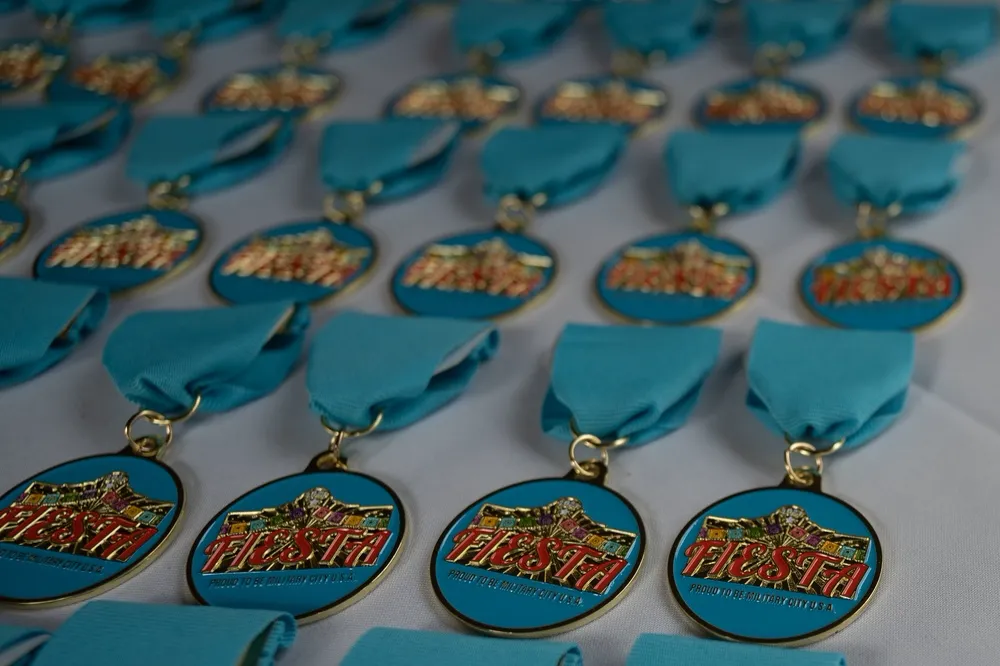
A strong Fiesta medal is not the one with the most effects. It is the one that makes the organization, year and story instantly recognizable while its spinner, dangler, ribbon and pin still work together in real wear.
Understand the format
Fiesta medals are wearable annual collectibles.
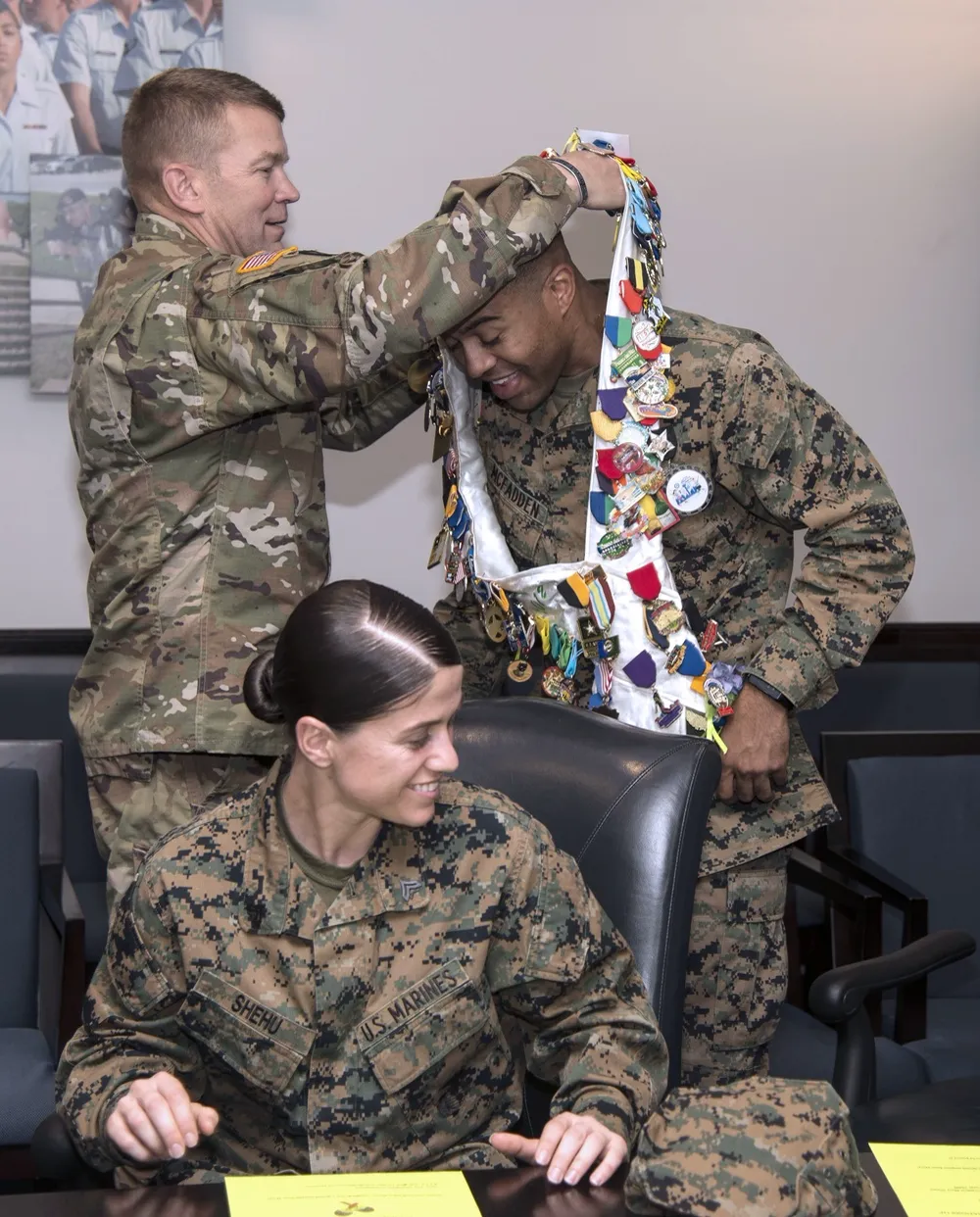
Unlike a race medal worn on a long neck ribbon, a Fiesta medal is commonly attached to a short ribbon drape with a pin. People wear, trade and collect new designs during San Antonio’s Fiesta season, often displaying many together on clothing, hats or a sash.
The official Fiesta San Antonio history traces the celebration to 1891. Its medal timeline describes King Antonio distributing coins to children in 1946 and Charles Orsinger punching holes in collected coins in 1971—an important step in the form that developed into today’s medals.
Current designs may add top bars, spinners, danglers, sliders, glitter, glow color, printing and backstamps. These are not isolated decoration choices; every extra component affects balance, assembly, packaging and schedule.
Define the job
Fundraiser, brand piece, school collectible or annual series?
Nonprofits may need a clear identity and controlled landed cost for fundraising. A local business can connect its brand with a San Antonio story instead of placing a logo on a generic colorful plate. Schools, clubs and teams can build around mascots, milestones or anniversaries. A yearly series benefits from a consistent backstamp, proportion and package system.
Decide who will buy or receive the piece, where it will be worn, the planned selling price and whether next year’s version should feel related. This prevents a promotional piece from becoming too heavy or a collector edition from looking too generic.
Design for the role before choosing the add-ons.Build the system
Start with the base structure.
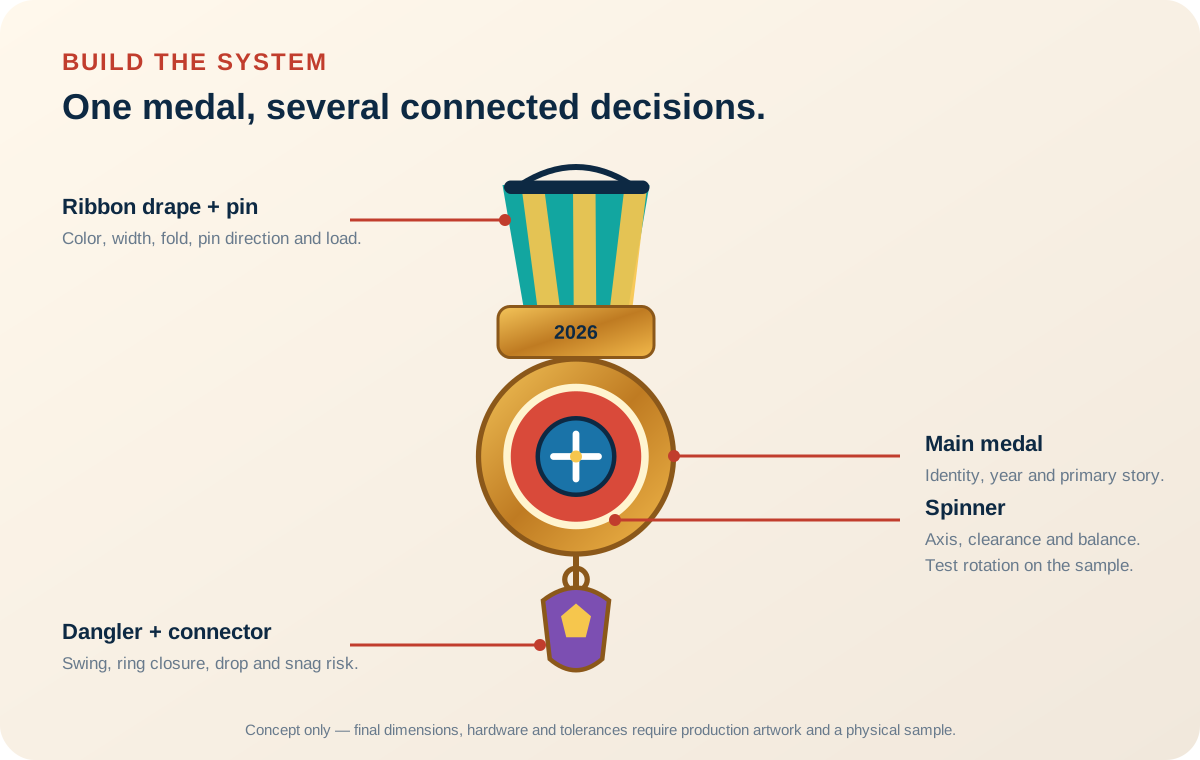
Plan the main metal body, short ribbon, pin, connection points and backside first. Then choose one movement or surface effect that helps tell the story. A Ferris wheel can rotate, a food or mascot icon can hang below, and a ball or vehicle can travel along a short slider path.
Engineer movement
Spinners, danglers and sliders have different failure points.
Spinner
Define the fixed frame, rotating part, axis, front and reverse artwork, clearance and weight balance. An off-center shape can hang unevenly or strike the frame.
Dangler
Check ring closure, metal around both holes, drop length and collision with the main face. Several charms can become heavy or snag nearby medals.
Slider
Define travel, end stops, track clearance and backside construction. Repeated sliding may create visible contact marks that a flat proof cannot show.
A moving sample must be handled, shaken and worn. “It moves once” is not enough: check connection security, edge comfort, visual balance and repeated contact with enamel or plating.
Choose visual effects
Use glitter, glow and print where they remain readable.
Glitter works best where its particles have enough area to register. Glow color needs sample review in ordinary light and after charging; a screen rendering cannot establish brightness or duration. Transparent color changes with the metal texture beneath it. Printing can preserve gradients, tiny lettering or illustrated details that cannot be separated cleanly by metal lines.
Crystals, lights and other fitted parts may increase perceived value, but also add assembly, packing and service risk. The buyer should decide whether the target customer will pay for the effect—not simply whether the factory can add it.
Control weight and wear
A satisfying hand weight can become an uncomfortable sash.
Fiesta collectors may wear many medals together. A heavy body, spinner, multiple danglers, top bar and thick hardware can pull a ribbon forward, strain the pin, damage clothing and collide with nearby pieces.
Evaluate the assembled product—not only the main metal body. Test whether the ribbon stays upright, whether the center of gravity makes the medal flip, and whether moving parts catch on fabric or neighboring medals.
Specify the ribbon
The ribbon drape is part of the structure.
Specify ribbon color or color combination, width, folded length, custom printing, one- or two-point attachment, pin size and pin direction. The connection between the ribbon and medal determines how the face hangs.
A heavier assembly should be tested with the exact ribbon and pin. Packaging should also prevent the pin from scratching the metal face and keep loose or moving parts from becoming tangled.
Choose the base process
Let shape and construction lead the material decision.
A simpler, flatter outline with clear color blocks may suit a stamped direction. Thick custom shapes, deeper relief, open areas and multi-part structures may point toward die casting. Material names alone do not establish quality.
Compare quotes on the same finished size, thickness, relief, plating, number of colors, moving parts, ribbon, pin, backstamp and packaging. Otherwise, a lower unit price may simply omit parts included elsewhere.
Simplify the artwork
Make the organization, year and story readable first.
Establish a visual hierarchy: who the organization is, what the annual theme is, where the year sits and which element moves. Very small words, thin lines, gradients and border decoration compete with axles, holes, metal partitions and connector rings for limited space.
A production proof should mark metal lines, color areas, finish, moving direction, axis or track, holes and connectors, front and reverse, ribbon colors, pin direction and packaging. Do not approve only a polished front rendering when the product depends on backside assembly.
Approve a complete sample
Test the medal as it will actually be worn.
- Organization name, year and small text
- Color and plating against the approved proof
- Metal borders, cutouts and sharp points
- Spinner rotation and axle retention
- Dangler ring closure and swing path
- Slider movement and end stops
- Balance, flipping and edge comfort
- Ribbon, connector and pin under full load
- Glitter, glow, print or transparent effects
- Backstamp, numbering and packaging
For a complex design, retain one approved assembled sample as the reference for bulk production. Record the complete configuration, including ribbon and pack—not only the metal body.
Plan the annual schedule
Work backward from the arrival date.
A dated Fiesta medal loses much of its selling window if it arrives after the season. The schedule must include concept work, logo and sponsor approval, production artwork, revisions, tooling, sampling, sample shipping, final approval, production, assembly, packaging, international transport and local distribution.
More stakeholders and more interactive parts require more time. Treat any production promise as provisional until artwork, quantity, sample requirements, packaging and shipping method are confirmed.
Confirm rights and status
A Fiesta-style medal is not automatically official.
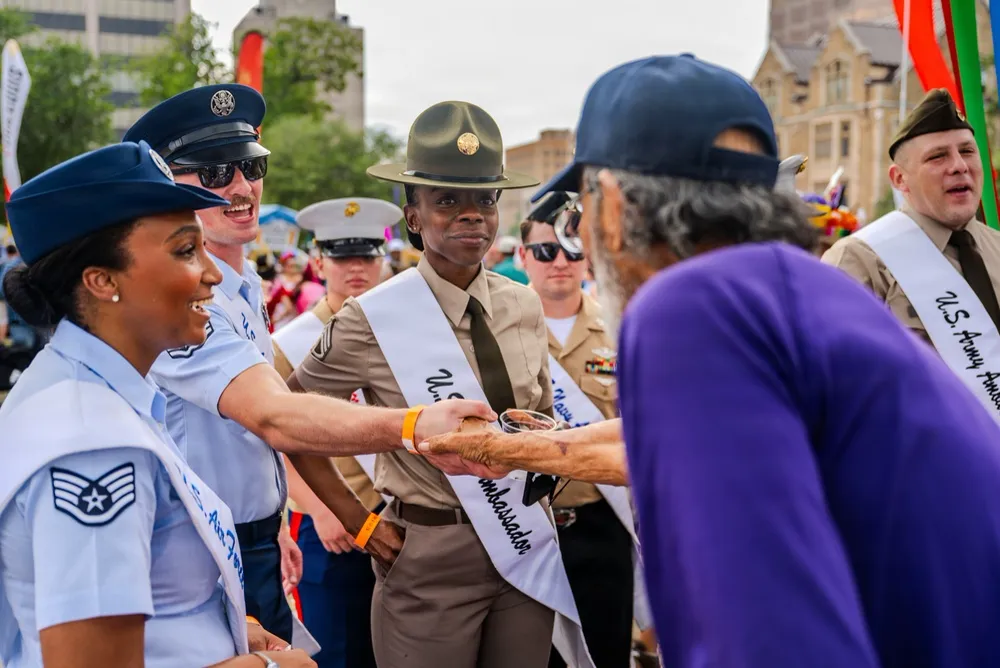
The Fiesta San Antonio website distinguishes official events, official merchandise and official medals. Similar colors or a San Antonio theme do not create permission to use the Fiesta® mark, official posters, event logos, team marks, sponsor marks or another artist’s work.
Before production, confirm who owns every name, logo, character, photograph and illustration, whether brand approval is required, and whether the product may accurately be described as “official.” A factory can assess manufacturability; it cannot grant the buyer rights owned by someone else.
Extra Dream custom support
From annual concept to an assembled Fiesta medal.
Wenzhou Oasis Metal Products Factory can review projects for organizations, businesses, schools, fundraising programs, award dealers and gift importers.
Review
Theme, year, artwork, rights, audience and arrival date.
Engineer
Body, spinner, dangler, slider, top bar and connectors.
Proof
Metal lines, colors, movement, reverse and ribbon.
Sample
Full assembly, wear, balance and movement checks.
Produce
Bulk manufacturing with appearance and quantity control.
Assemble
Ribbon, pin, interactive parts and individual packing.
Deliver
International shipping and DDP feasibility by destination.
Material, dimensions, colors, special effects, moving parts, order quantity, sample plan and delivery schedule are confirmed for each project. The more complex the construction, the more important a complete assembled sample becomes.
Planning an annual medal?
Send eight useful details.
Share the organization and rights status; theme, year, text and logo; intended size and shape; spinner, dangler, slider or top bar; colors, finish and special effects; ribbon, pin, reverse and packaging; quantity for each design; and delivery country, postal code and required arrival date.
Sources and image notes
Historical and market references explain the category; third-party specifications do not establish universal manufacturing limits.