
Golf clubs · Tournaments · Pro shops · Corporate gifts
How to order custom magnetic golf hat clip ball markers.
Match the marker material, magnet, clip and finish as one working assembly—not four unrelated specifications.
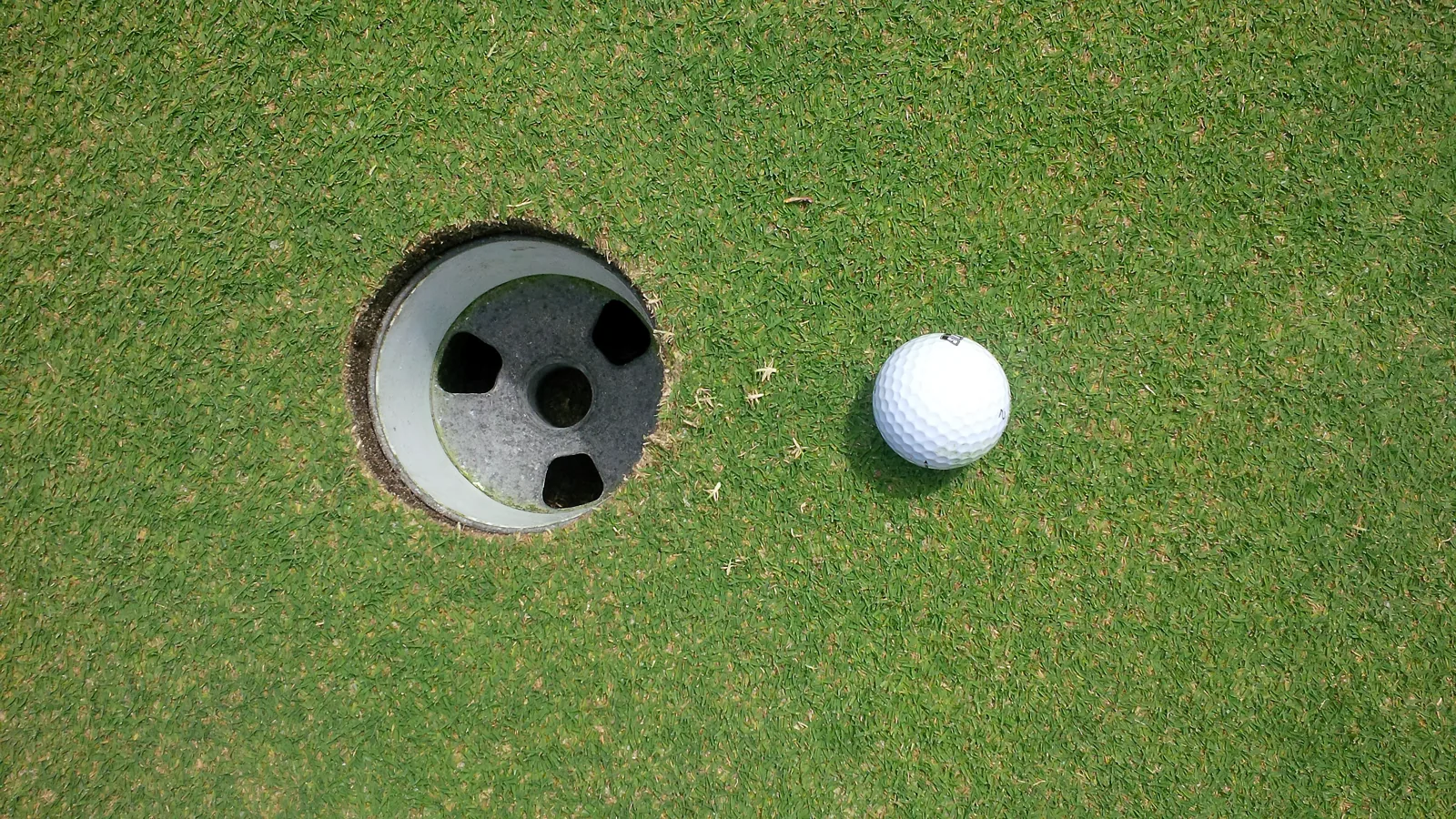
A dependable hat-clip marker needs a flat marker that the magnet can actually attract, enough hold for normal movement, a clip that recovers after repeated use, and a design the golfer can remove with one hand. Approve those functions on a physical sample before bulk production.
The removable ball marker is placed on the putting green to preserve the position of a lifted ball. The magnetic hat clip stays on a cap brim, pocket or another suitable edge and keeps that marker accessible between uses.
The R&A defines a ball-marker as an artificial object used to mark the spot of a ball to be lifted, such as a tee, coin, purpose-made marker or another small item of equipment. That practical role should guide the design: the marker needs to sit flat, remain visible and be easy to handle.
Tournament pack
Prioritize delivery date, repeatable branding, straightforward packing and efficient distribution.
Member or pro-shop item
Prioritize tactile quality, coordinated club identity, display packaging and reorder consistency.
Corporate golf gift
Coordinate the marker, clip, divot tool and packaging as one branded presentation.
Metal markers around 19–25 mm are common in the market, but that range is not a universal Rule of Golf specification. One stocked clip may be designed around a 19 mm marker while another uses 25 mm. “Standard size” is not enough information for production.
Confirm the marker diameter, thickness and weight; the support area on the clip; magnet dimensions and location; centering; finger access; and whether an irregular shape can rotate or sit off-center. If the project uses stocked hardware, obtain its compatible marker dimensions before artwork is finalized.
A proven stocked clip can reduce tooling and structural risk. A special clip silhouette or branded clip face should be quoted as a second custom component with its own tooling, sample and assembly checks.
A magnet can attract ferromagnetic iron or steel. Common brass and zinc alloys do not behave like iron merely because they are metallic. A project that chooses a decorative alloy without defining the magnetic path may reach sampling with a marker that does not hold securely.
A stamped iron marker can be attracted directly by a magnet embedded in the clip. A brass or zinc-alloy face may need a flat steel backing plate, iron insert or another validated construction. If magnets or magnetic components are installed on both sides, polarity and assembly direction also need control.
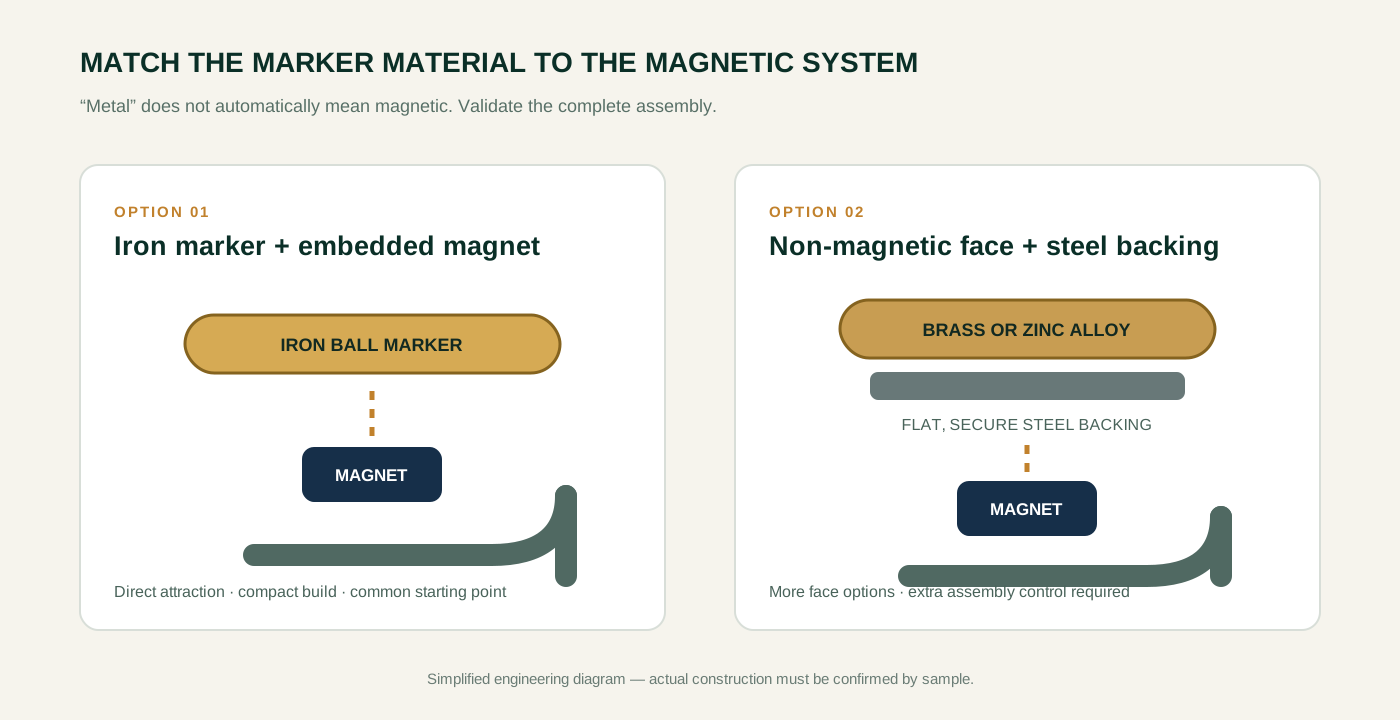
The marker should remain attached while the golfer walks, bends, handles a bag or makes a normal swing. It should also come away without forcing the user to pull hard on the cap brim. Too little hold creates loss risk; excessive hold and poor finger access make the accessory frustrating.
- Test the clip horizontally, vertically and upside down
- Simulate walking, a light bump and contact inside a golf bag
- Try one-hand removal with dry and damp fingers
- Check a deliberately off-center marker position
- Repeat removal to expose loose magnets or backing plates
- Clip to representative brim thicknesses and inspect recovery
The finished assembly matters more than a magnet supplier’s theoretical rating. Plating, adhesive, backing thickness, air gaps and marker weight can all change practical holding performance.
A complete slogan, tournament date, sponsor list and detailed photograph rarely remain legible on a marker little larger than a coin. Keep one recognizable symbol, limited wording and clear metal boundaries.
Die struck + soft enamel
Raised metal lines separate recessed colors, giving club crests and event marks a traditional badge character.
Imitation hard enamel
A flatter polished surface suits restrained brand marks and a more refined gift position.
Print + clear protection
Useful for gradients and fine multicolor artwork, subject to approved durability and edge treatment.
Uncolored relief can use bright, matte or antique contrast. Zinc-alloy casting can support deeper or irregular shapes, but the extra weight, flatness and magnetic backing must be evaluated. Avoid unnecessary high projections, very fine gaps and important text at the outer edge.
A normal logo or short decorative line does not automatically make a marker non-conforming. The risk changes when the product is designed to measure slope or green speed, contains optical or electronic functions, or combines larger dimensions with long directional lines or extensions.
Current USGA and R&A guidance includes criteria involving vertical height over 1 inch, and horizontal dimensions over 2 inches when paired with specified line or extension features. The way an item is described and used can also matter. A competition-facing product should therefore remain small, low and easy to lay flat unless the brand has reviewed a more specialized design against the current Equipment Rules.
Review long arrows, scales, folding elements, slope-reading features and “improves aim” marketing before tooling. Confirm the current official rules for the intended competition or sales channel.
A decorative marker cannot rescue a sharp, weak or poorly aligned clip. Inspect the entry shape, edge safety, compatible material thickness, spring recovery, magnet retention, contact surfaces and plating consistency.
- Smooth entry without a sharp edge against fabric
- Enough grip for the intended cap brim or pocket
- Spring recovery after repeated attachment and removal
- Magnet mechanically retained or securely bonded
- Minimal unnecessary gap between magnet and steel surface
- Finish coordinated with the marker and any divot tool
If the clip itself receives a custom outline, second logo or decorative relief, treat it as a separately engineered metal part rather than a free extension of the marker mold.
Bright plating attracts attention but shows fingerprints. Antique treatment can emphasize relief but may darken small marks. Soft enamel gives visible metal separation, while printed detail depends more heavily on its protective surface.
If the order has nickel, lead, coating or other compliance requirements, define the destination market, restricted substances, test method, laboratory and cost responsibility before quotation. Do not rely on an undefined “eco-friendly” claim.
Event distribution
Individual bags or branded cards can keep handling simple and control cost.
- Fast counting and distribution
- Clear event and sponsor message
- Carton plan for a fixed event date
Retail or gift presentation
Pouches, display cards or boxes can coordinate the marker with a divot tool or other accessories.
- Barcode and hang-hole planning
- Surface separation inside the pack
- Display direction and gift experience
Magnetic hold does not replace protective packaging. Transport vibration and nearby metal products can still create scratches, movement or unwanted attraction between packed sets.
Review the visual proof for logo proportion, line width, color boundaries, dimensions, plating areas, backing construction and packaging. Then use a physical sample to check that the marker sits flat, centers properly, stays attached and can be removed naturally.
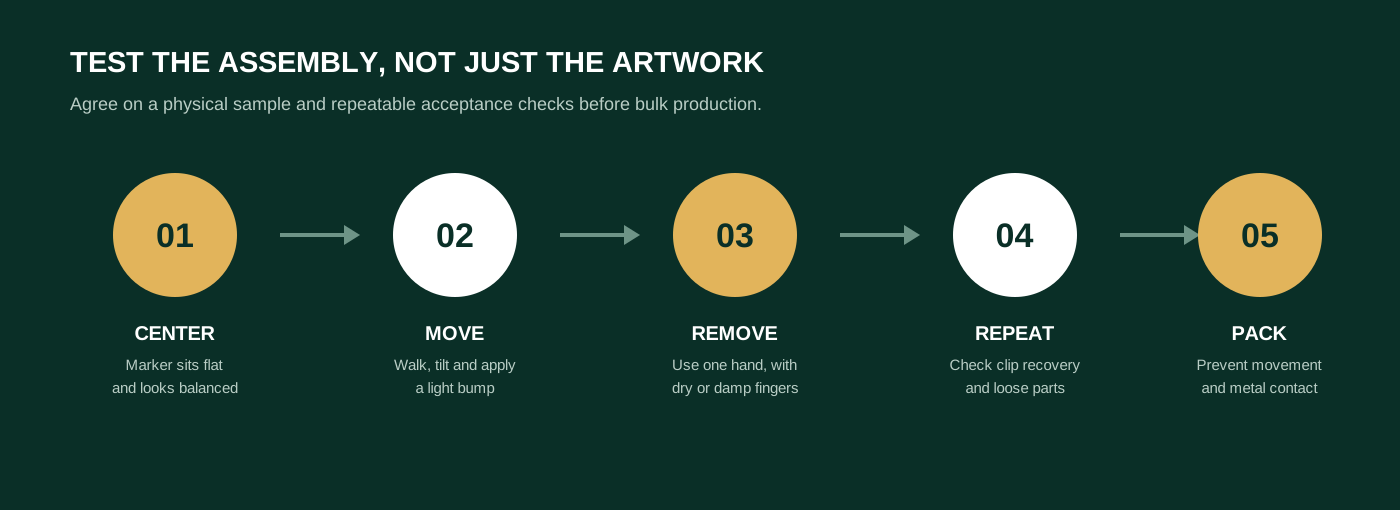
Bulk inspection should also catch missing, reversed, offset or loose magnets; weak clips; warped or scratched markers; color and plating mix-ups; and incorrect packaging versions. Magnetic performance is functional, so a project-specific check should accompany normal appearance inspection.
Standard clip + custom marker
A practical route for a first program, fixed event date or controlled budget.
- Fewer custom components
- Known compatible dimensions
- Lower structural-development risk
Fully custom marker + clip
Useful when the hardware itself must carry a distinctive silhouette or second brand message.
- More visual ownership
- Separate tooling and sampling
- Additional magnetic and clip testing
Extra Dream publishes a typical MOQ of 500 pieces. The actual MOQ, tooling and schedule for a golf marker program still depend on whether the clip is stocked or custom, the marker process, packaging, number of versions and delivery requirements.
Extra Dream physical-production support
Turn club or event artwork into a tested metal accessory.
Wenzhou Oasis Metal Products Factory can review the intended use, simplify artwork for a small metal surface, compare marker materials and finishes, match a proven clip or evaluate a custom structure, arrange a physical sample and coordinate project-specific packaging.
Review
Use case, artwork rights, quantity, market and deadline.
Specify
Marker size, material, finish, clip type and magnetic path.
Proof
Production artwork, component layout and packaging details.
Sample
Appearance, centering, hold, removal and clip recovery.
Produce
Bulk manufacture, assembly, inspection and packed delivery.
Send the logo, quantity and event date.
Also include whether you want a standard or custom clip, target marker size, finish, packaging, destination country and postcode, and any material or testing requirements. If the construction is undecided, start with the use case and target budget.
Buyer FAQ
Resolve the hardware questions before tooling.
Must a golf ball marker be 25 mm?
No. About 19–25 mm is a common commercial range, not a universal required size. Match the marker to the selected clip, magnet, artwork and intended handling.
Will a zinc alloy golf marker stick directly to a magnet?
Do not assume it will. Common zinc alloys and brass are not reliably attracted like iron or steel. A steel backing plate, iron insert or another validated magnetic construction may be needed.
Is a stronger magnet always better for a golf hat clip?
No. The marker should remain secure during normal movement but still be removable with one hand. Test the complete assembly rather than judging the magnet specification alone.
Can a normal enamel pin be used as a golf ball marker?
Only after its back, thickness and magnetic construction are redesigned. A pin post, clutch, curved back or high projection makes an ordinary lapel pin unsuitable as a flat putting-green marker.
Do the ball marker and hat clip need separate molds?
A stocked hat clip paired with a custom marker may require customization only for the marker. A fully custom clip shape is a second component and needs separate tooling, sampling and assembly evaluation.
Can a ball marker with alignment lines be used in competition?
The answer depends on dimensions, line length, extensions, measuring features, marketing claims and use. Tournament products should be reviewed against the current R&A and USGA Equipment Rules.
What is a practical first-order configuration?
For many clubs, events and brands testing demand, a proven standard clip with a custom stamped iron marker is a lower-risk starting point. Special shapes and fully custom clips can follow after the concept is validated.
Rules and image source
Equipment guidance can change. Review the current official rules for the intended competition and market before approving a specialized marker.
- The R&A — Rules of Golf definitions ↗
- USGA — restrictions on items used as ball-markers ↗
- USGA — alignment device definition and ball-markers ↗
- The R&A — Equipment Rules ↗
- Photos2Use — golf ball near hole, CC0 ↗
This independent manufacturing guide is not sponsored, endorsed or approved by The R&A or USGA. The external golf photograph is a context image, not an Extra Dream product or customer project. Golf and event marks supplied for production must be authorized by the buyer.