
Practical gifts · Brand merchandise · Bulk procurement
Custom trolley coin keyrings: sizes, logo options and bulk ordering.
Start with the trolley lock. Then choose a token people can remove, use and carry comfortably—with your brand clearly visible.
A promotional gift does not have to be complicated. It needs to be worth keeping and useful in the recipient’s daily routine.
A trolley coin keyring combines a small shopping cart token with a keyring, clip or holder. Where a compatible coin-deposit lock accepts it, the user removes the token, inserts it to release the trolley, and retrieves it after returning the trolley.
For branded giveaways, charity merchandise or retail gifts, the idea is straightforward. The procurement challenge is less obvious: a good-looking logo cannot compensate for a token that will not fit or is awkward to detach.
Confirm the target lock system → choose the token and carrying structure → develop the logo and packaging → test a finished sample.
1. Is a trolley token useful to your customers?
A trolley token is not a payment coin. Its job is to work with a suitable shopping trolley deposit mechanism.
Possible programs include company giveaways, membership gifts, charity fundraising merchandise and small retail accessories. These are use-case suggestions—not a claim that every country or customer group has the same need.
Before ordering, ask whether the recipients actually use coin-operated trolleys. If their local stores do not require a physical coin or token, the item becomes primarily a decorative keyring rather than a useful trolley accessory.
Lock manufacturer Wanzl documents several mechanical deposit systems as well as digital solutions. The presence of shopping trolleys alone does not establish demand for a physical token. See Wanzl’s trolley equipment brochure and its digital deposit-lock explanation.
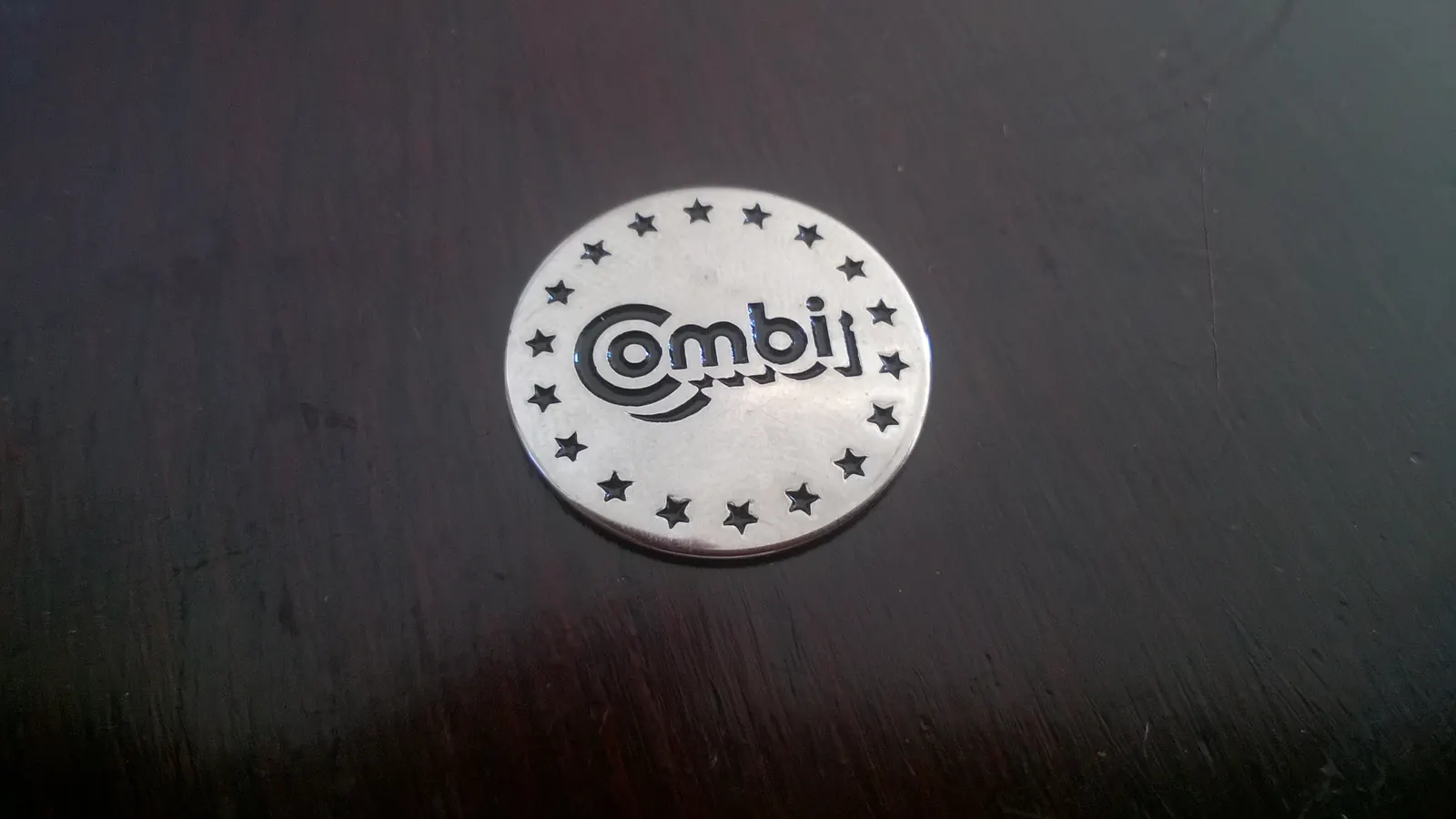
2. £1 and €1 references are not interchangeable specifications.
Buyers may describe a requirement as a “£1 trolley token” or “€1 shopping cart token.” That is a useful starting point, not a complete production specification.
| Coin reference | Shape | Diameter | Thickness |
|---|---|---|---|
| Current UK £1 | 12-sided | 23.43 mm maximum, point to point | 2.80 mm |
| €1 | Round | 23.25 mm | 2.33 mm |
Sources: The Royal Mint and European Central Bank.
These are real coin dimensions, not Extra Dream token specifications. Copying them does not establish compatibility with a particular lock.
The entry slot, internal clearance and operating sequence matter. So do the token’s attachment tab, hole position, raised decoration and final coating. Confirm the complete finished geometry rather than diameter alone.
If you are unsure how to measure the requirement, send the lock model, clear photographs or a token already verified to work. A photograph can help identify the mechanism but cannot replace a physical fit test.
For a multi-country order, identify the actual systems in each market before deciding whether one design is sufficient. A country name is not a compatibility specification.
3. Choose the structure around the user’s actions.
How the token comes off the keyring—and goes back on—determines much of the everyday experience.
| Structure | What to check |
|---|---|
| Detachable token with clip | Easy removal, reliable fastening, and no attachment feature blocking insertion. |
| Token with holder or carrier | Comfortable removal, secure retention after replacement, and manageable overall size. |
| One-piece handled design | Whether the handle obstructs the target lock and whether that exact construction has been tested. |
Ask for both the front/back layout and an explanation of the operating sequence. A front-view image does not show whether the clip gets in the way when the token is inserted.
Do not describe a design as a universal unlocking tool. This guide concerns normal, permitted token use—not bypassing a trolley-return mechanism.
4. Make the logo readable before adding decoration.
The branding area is small. A logo, full organization name, slogan and website squeezed onto one token can become a block of unreadable detail.
Keep the primary mark on the token. Put the longer brand story, campaign message or instructions on a backing card.
| Decoration | Design direction | Sample checkpoint |
|---|---|---|
| Raised or recessed metal | Simple marks with a tactile metal appearance | Readable small details; relief and edges that do not interfere with fit |
| Enamel color fill | Logos with clearly separated color areas | Detail simplification, color balance and metal-line definition |
| Laser marking | Simple text, marks or numbering | Contrast and legibility at actual size |
| Printing | Multicolor or more complex artwork | Clarity, protective treatment and finished surface quality |
Each process must be assessed against the chosen material and structure. A clear screen image does not prove the design will remain clear on a small physical token.
Measure and test the finished item after plating, color filling or other surface treatments—not only the unfinished blank. For wider finish choices, see our custom metal finish guide.
5. Compare what the quotation actually includes.
Two similar-looking keyrings can involve different development work. Adding branding to an existing compatible construction is not the same project as creating a new token outline, connection and carrier.
A new structure may require additional tooling, assembly development and tests. Compare the complete scope rather than the unit price alone.
- Are the clip, keyring, individual packaging and backing card included?
- Is the decoration on one side or both?
- How many units are needed for each logo and market-size version?
- Are tooling, samples and freight listed separately?
Confirm the project’s MOQ and schedule against the actual design. Do not assume that terms for an ordinary decorative keyring also apply to a functional trolley token.
For event distribution, straightforward packaging can make counting and handing out the items easier. For retail or fundraising, a backing card should explain the purpose, tested compatibility range and operation—not simply make the item look more expensive.
6. Approve one complete use cycle—not just the color.
Visual approval is only part of sample approval. Use a finished, fully assembled sample on the actual intended lock.
- Detach. Remove the token normally from its clip or carrier.
- Insert and release. Confirm that it fits and releases the trolley without force.
- Return and retrieve. Return the trolley and check that the token comes out smoothly.
- Reattach. Put it back on the keyring and check that the connection remains secure.
If several lock models are part of the program, test the agreed models separately and record the scope. Passing one lock does not establish compatibility with every supermarket.
Marketing claims should match that tested scope. Use the approved finished sample and agreed checks as references for production inspection. Our production proof approval guide explains how to record artwork and specification decisions before tooling; the trolley lock tests remain specific to this project.
7. Develop the token, hardware and packaging together.
Extra Dream provides custom metal gift and souvenir manufacturing services. A trolley coin keyring project can begin with your target market, brand artwork and quantity, followed by an assessment of the proposed structure and decoration.
Exact compatibility must be established through project review and physical sampling. We do not promise a lock fit that has not been tested.
We can work through artwork production review, sample approval, bulk inspection, packaging and shipping arrangements with you. Treat the token, clip and backing card as a coordinated product rather than three unrelated accessories.
You do not need finished artwork to start the conversation. Share the logo and reference direction first, then settle the functional specification before investing in the full presentation. Learn more about our custom metal products factory.
Buyer questions
Can one trolley token work with every shopping cart?
No. Fit depends on the lock and the finished token construction. Validate it on the target system rather than making a universal compatibility claim.
Does a UK trolley token have to be 12-sided?
The current £1 coin is 12-sided, but that fact alone does not determine the shape a particular lock accepts. Confirm the target mechanism instead of choosing by country alone.
Can I request branding on both sides?
Yes, as a design requirement for assessment. Both faces, surface treatments and final thickness must be evaluated together so decoration does not interfere with use.
What if I cannot provide a lock sample?
Start with the model, photographs and details of a coin or token known to work. Arrange a target-system sample test before bulk production where possible. If no test is available, record that compatibility remains unverified.
References and image credit
- The Royal Mint — current 12-sided £1 coin specifications
- European Central Bank — common sides and coin dimensions
- Wanzl — shopping trolley equipment and deposit systems
- Wanzl — digital deposit-lock context
- Donald Trung Quoc Don — Combi token photograph, CC BY-SA 4.0
Coin dimensions are reference facts, not production drawings or fit guarantees. Referenced organizations do not endorse this independent guide. The external photograph is not evidence of Extra Dream manufacturing or a customer relationship.