
A buyer's field guide · Museum shops · Cultural merchandise
Custom museum enamel pins: from cultural motifs to shop merchandise.
A small pin cannot carry an entire exhibition. It can carry the one detail a visitor wants to remember.
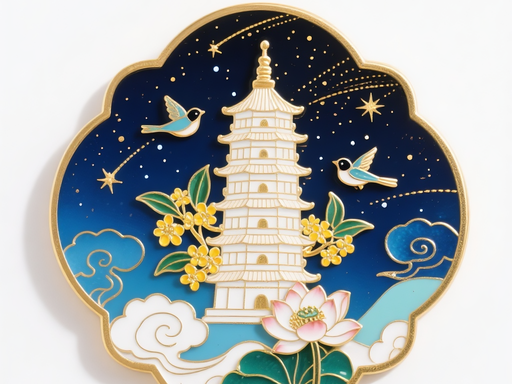
A visitor leaving a museum may not want a miniature copy of an entire painting. They may remember the silhouette of a building, a bird from an exhibition, or a pattern on one remarkable object.
For a museum shop, cultural venue or exhibition team, the challenge is choosing what deserves to remain when the subject is reduced to a wearable metal piece. A successful pin keeps the story recognizable while working as a product in its own right.
01 / Select
What should visitors remember?
Start with the memory you want the pin to bring back. A building or distinctive interior can point to the venue. An artifact, character or motif can recall a particular exhibition. Birds, plants and landscapes can express natural history or local identity.
There is a real market for these directions. The Getty Museum Store offers pins inspired by artworks, artifacts and architecture; the Art Institute of Chicago Museum Shop lists pins based on individual works. These are independent retail references, not Extra Dream projects or designs to copy.
The useful question is whether the chosen element belongs to this place or exhibition. A crane can be beautiful anywhere. A crane connected to a collection, a local habitat or a particular story gives visitors a reason to choose it here.
02 / Edit
Give one motif the leading role.
In the architectural reference above, the building holds the center while birds, flowers and clouds establish the setting. The supporting details enrich the scene, but the building gives the eye somewhere to begin.
Adding more elements does not automatically make a pin more informative. A building, figure, date, floral border and paragraph of text can compete for a limited area. Decide what must read at a glance and what can reward a closer look.
If the intended pin is compact, simplify early. Which tiers of a building identify it? Which ornaments can go? Does the title need to appear on the front? These choices are part of translating the image, not an afterthought.
03 / Translate
Let the metal speak its own visual language.
The crane reference uses the bird's outline, pine branches, mountains and open space as one composition. Empty space can make a small piece feel lighter and make the main subject easier to find.
If a project calls for open areas, the narrow connections, edges and wearing structure need their own assessment. A drawing that looks airy on screen still has to work as an object.
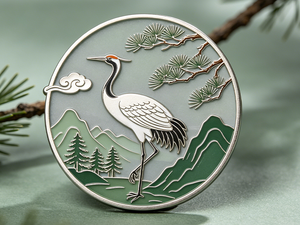
A colorful bird or ornate artifact may need another approach. Metal lines can organize color; a strong outline can carry the subject; a dense illustration may need selective simplification or a printed pin process. A product with a hanging loop should not be presented as a wearable pin until its actual attachment is confirmed.
Swipe sideways to compare options →
| Source feature | Possible direction | Buyer check |
|---|---|---|
| Recognizable building or artifact | Custom outline, reduced lines or selected relief | Does it remain identifiable at the intended size? |
| Flower, bird or patterned textile | Metal boundaries and planned color areas | Are the color blocks clear without crowded lines? |
| Fine gradients or dense imagery | Redrawn color groups or a printed pin option | Which details are essential to preserve? |
| Light, open composition | Selected cutouts and a strong outer frame | Are narrow connections and wearing points practical? |
Material and process cannot be identified reliably from a photograph. Compare the artwork, size, use and budget before choosing a route. Our enamel versus printed pins guide explains the main design differences.
04 / Curate
A collection needs a shared language, not repeated artwork.
One design might represent the building, another an artifact, and a third a local bird or story. Each should make sense on its own. Together, they can share a metal tone, line weight, color relationship and compatible scale.
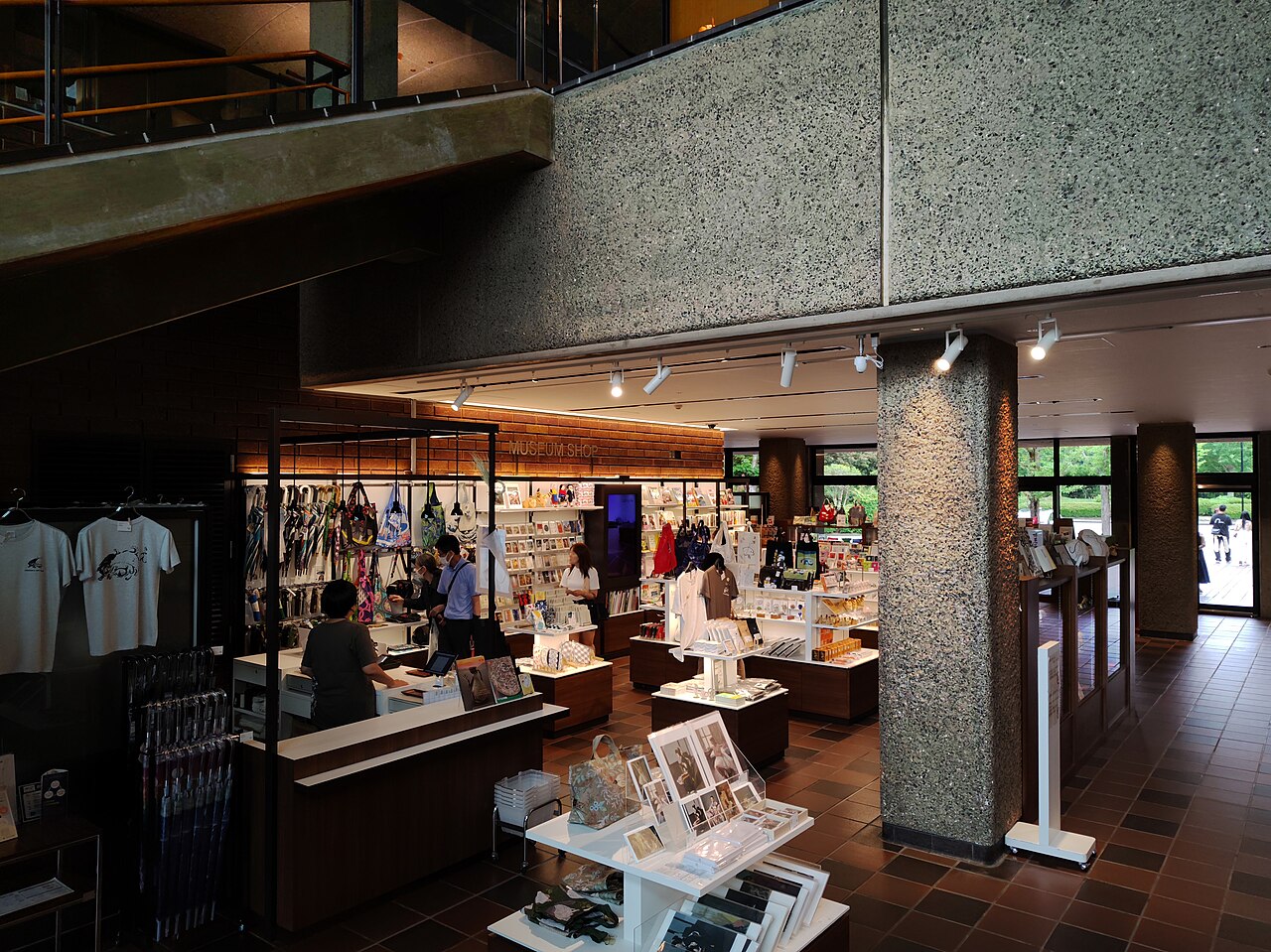
For a first release, choose a few distinct subjects rather than manufacturing every possible motif. Plan quantities by design, considering display space and the shop's budget. Total units across a collection are not the same as units per design for production planning.
Let actual sales, stock levels and visitor feedback guide later additions. A longer collection is not necessarily a better one.
05 / Buy
Think about wearing and retail cost together.
A pin will be picked up, worn and carried. Could a long projection catch on fabric? Might a broad or heavy outline rotate? Does the design call for more than one fixing point? Those questions can change the artwork as well as the attachment.
The quote also depends on more than the finished width. Shape, detail density, color areas, cutouts and fittings can affect the manufacturing route. If the shop has a target retail price, share it as a design constraint, then compare the factory quotation with freight, duties and other landed costs. A factory unit price alone is not a retail margin.
Decide early whether the goal is an accessible everyday memento or a more detailed collector piece. That choice gives the designer and manufacturer a clearer direction.
06 / Make
Bring the cultural idea into a manufacturable form.
You do not need a finished production drawing at the outset. Bring visual material that your project is authorized to use, the story behind it and the product format you have in mind. Then identify the visual features that should survive translation into metal.
Extra Dream is the export brand of Wenzhou Oasis Metal Products Factory. We support OEM and ODM custom metal products, including enamel pins, badges, keyrings, magnets, coins and related gifts. For a cultural merchandise project, our team can review the artwork and discuss the outline, relief, color areas, surface finish and attachment options. The appropriate scope is confirmed for each project.
One cultural theme can also become a small family of products. A pin may keep the clearest silhouette, while a magnet or coin can carry more of the scene. Shared visual cues connect them without forcing the same image onto every object. See our factory and company facts for the products and manufacturing support we describe publicly.