
Culture · Product design · Custom manufacturing
Cultural merchandise is more than a logo.
How do you turn a cultural symbol into something people genuinely want to buy? Start with the memory, identity or experience they want to carry—not with the first blank product in a catalogue.
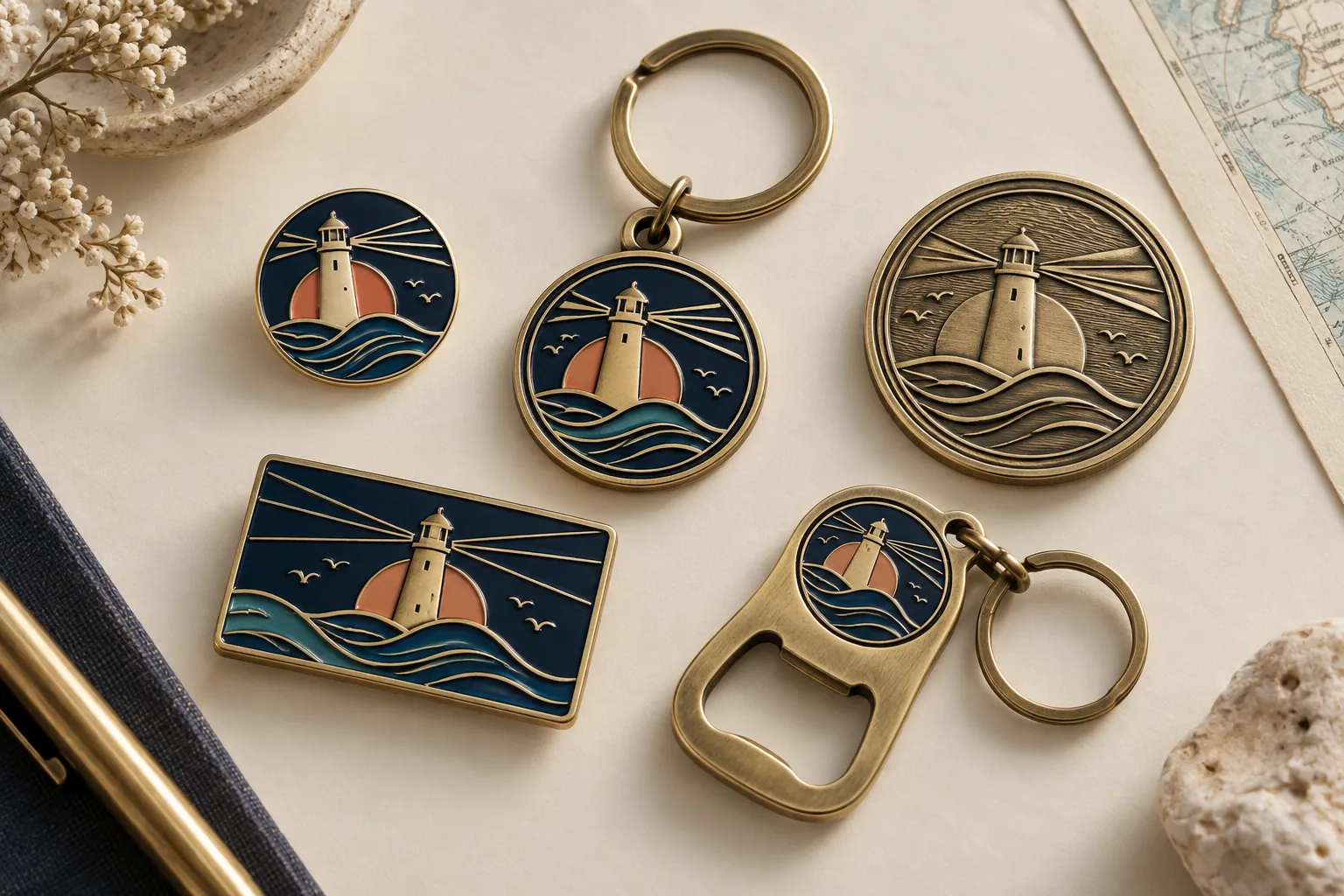
People rarely buy cultural merchandise because an institution placed its logo on metal. They buy a portable piece of a place, story or identity they want to remember—or share with someone else.
01 · Find the cultural moment
Choose one doorway into the larger story.
A museum, city, destination or cultural organization may have hundreds of meaningful symbols. Putting all of them on one small object usually produces visual noise. A stronger starting point is one recognizable, emotionally useful moment.
- An architectural silhouette visitors recognize
- A distinctive detail from an artifact or pattern
- A character’s familiar expression or gesture
- A phrase that belongs to the place or community
- The moment people remember from an event
- A symbol that represents the organization’s spirit
The chosen element needs visual identity and a reason to matter. The buyer may be saying: “I was there,” “I belong here,” “this experience mattered,” or “I want to give this story to someone else.” Cultural merchandise does not shrink an entire culture into one object. It selects an entry point through which the larger story can be remembered.
02 · Match the medium to the meaning
The same symbol can become very different products.
Choose the object only after the cultural idea, audience, sales setting, quantity and target price are understood.
Identity to wear
Good for characters, emblems, membership, exhibitions and collectible series.
A story with weight
Useful for history, ceremony, anniversaries, two-sided storytelling and limited editions.
A place at home
Well suited to architecture, landscapes, local memory and destination collections.
Culture in use
Turn a symbol into an everyday accessory for events, hospitality and lifestyle brands.
A shared achievement
Give cultural festivals, races, schools and community events a physical moment of recognition.
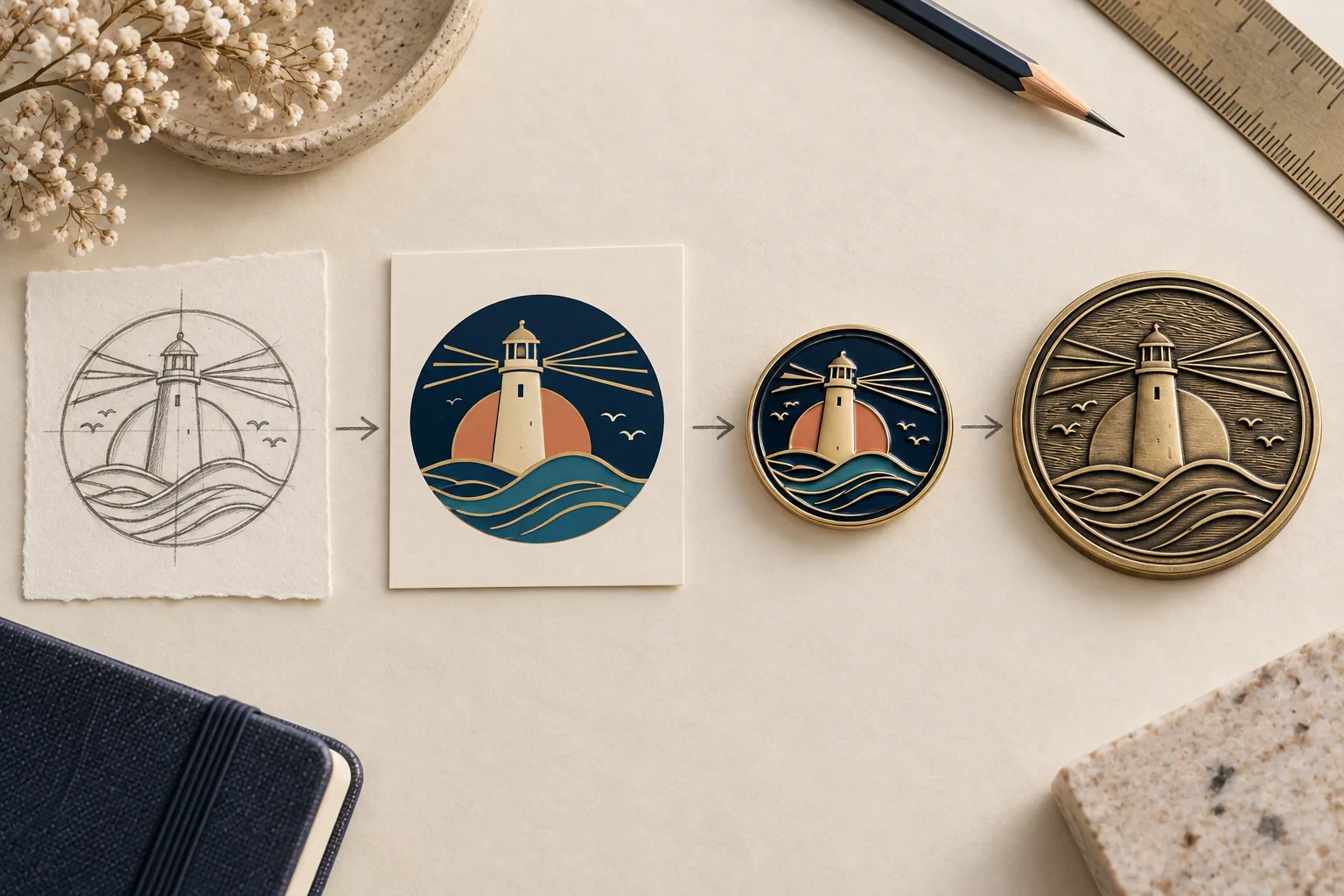
03 · Design for two distances
Let people understand it quickly—then reward a closer look.
On a shelf, at an event table or on a phone, people do not begin by reading a long cultural explanation. The silhouette, main color and subject should make sense in seconds.
First glance
A clear outline, focal symbol and readable use. The buyer understands what world the product belongs to.
Second discovery
Relief, reverse-side wording, edge detail, texture, packaging or a hidden element deepens the story.
Metal can add dimension through 2D or 3D relief, recessed texture, cutouts, dual plating, enamel, printing, clear epoxy and moving structures. More processes are not automatically better. Keep the effects that strengthen the theme; remove those that only add cost or distract from it.
04 · Create a product ladder
Do not ask one item to serve every customer.
A visitor making a spontaneous purchase, a collector seeking detail and a buyer choosing a formal gift have different reasons to spend.
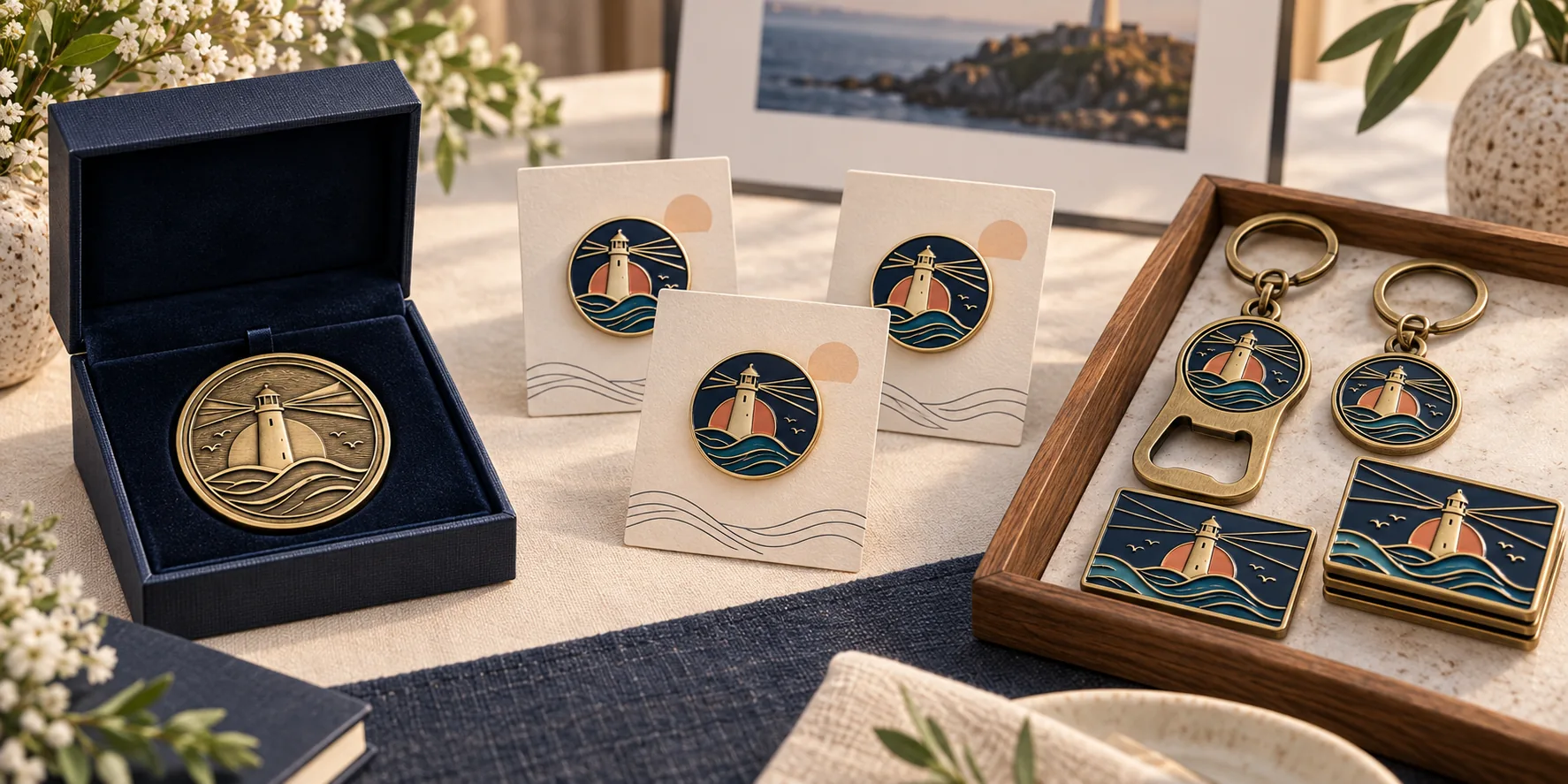
Accessible entry piece
A small pin, keychain or basic magnet for impulse purchase, event distribution or bundle sales.
Core collectible
A two-sided coin, dimensional magnet or distinctive pin that carries the collection’s main story.
Gift or limited edition
More complex relief, dual-metal effects, numbering or presentation packaging for anniversaries and VIP programs.
05 · Make the idea manufacturable
A beautiful screen image is not yet a production specification.
Before quoting or tooling, the design needs a practical review. Extra Dream can examine a client’s illustration, brand guide, collection image or concept sketch and help define the production details.
- Minimum line and text size
- Metal divisions between enamel colors
- Enamel, printing or another process for gradients
- 2D levels or sculpted 3D relief
- Finished size, thickness and weight
- Strength around cutouts or moving parts
- Front, reverse and edge information
- Plating, attachments and packaging
Wenzhou Oasis Metal Products Factory—using the Extra Dream brand—supports artwork review, process recommendations, specifications, quotations, production proofs, physical samples when appropriate, mass production, inspection, export packing and international shipping. Our role is not to invent a culture’s story for its owners. It is to help turn an approved story into something that can be quoted clearly, manufactured consistently and delivered reliably.
06 · Avoid predictable failures
Six ways promising merchandise becomes forgettable—or expensive.
Using only the logo
Keep necessary brand recognition, but give the customer a place, character, memory or experience to connect with.
Filling every empty space
Choose one visual lead. Move supporting information to the reverse, edge, backing card or package.
Designing before checking production
Discuss size, process and budget early enough to preserve the original idea without a last-minute redesign.
Comparing unit price alone
Normalize material, size, thickness, finish, attachment, tooling, sample, packaging and delivery before comparing quotes.
Skipping proof or sample approval
Confirm the exact artwork, wording, dimensions, colors, orientation and packaging in writing. Sample higher-risk projects when necessary.
Ignoring image and IP rights
Confirm the required commercial rights for artworks, artifacts, characters, trademarks and cultural imagery before production.
07 · Work with a clear custom process
From cultural brief to packed order.
- STEP 01
Understand
Define the theme, buyer, sales or gifting setting and desired response.
- STEP 02
Recommend
Select pins, coins, magnets, keychains, openers, medals or a focused series.
- STEP 03
Engineer
Review size, material, relief, color, finish, structure and packaging.
- STEP 04
Quote
Write the confirmed specification into the quotation and production proof.
- STEP 05
Sample
Choose whether physical sampling is justified, then record approval.
- STEP 06
Produce
Manufacture and inspect appearance, quantity, attachments and packing.
- STEP 07
Deliver
Plan shipping for the destination and check DDP availability when requested.
Have a cultural merchandise idea?
Bring us the story. We’ll help shape the product.
Share whatever you already know—your theme, audience, quantity or reference artwork. Our team can help clarify the materials, production details and next steps.
The lasting test
What does the customer take home?
Good cultural merchandise is not merely a reproduction of cultural content and not merely a souvenir stamped with an institution’s name.
It makes a large history touchable, a distant place portable and a personal affinity visible. When the symbol, object and manufacturing method serve the same story, a piece of merchandise can become something people choose, use and keep.
Editorial references
These sources informed the discussion of museum retail, visitor experience and how consumers perceive creativity in museum products.