
Employee service awards · HR & Procurement · Bulk orders
Custom years of service pins: design, quantities and reorders.
Build a consistent milestone series, calculate what each level needs and plan the next order around your award calendar.
Employees reaching five, ten and twenty years can wear pins from the same series, while HR needs a different quantity of each milestone every year. Once the first designs are approved, the next questions are practical: which version is running low, can the remaining stock be used again, and what changes when another milestone is added?
Years of service pins mark an employee’s time with an organization. Treat custom employee recognition pins as an ongoing purchasing program: define the milestones and recipients, build a consistent design, then manage quantities, stock and reorders separately for each level.
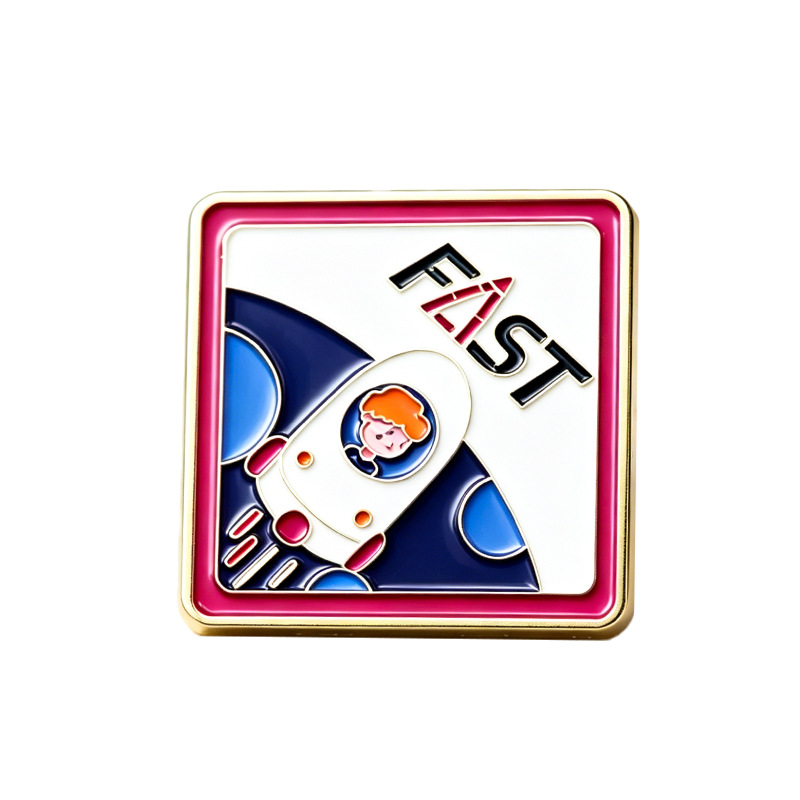
1. Define what the milestone number means.
Ten years of employee service and a company’s tenth anniversary may use the same number, but they commemorate different things. State what the number represents in the design brief so the two projects stay distinct.
Choose milestones around your organization’s recognition policy, such as five, ten and twenty years. HR should establish the eligibility date, who qualifies, and whether awards are presented on individual anniversaries, at quarterly events or during an annual ceremony. The artwork and quantity schedule can then follow the same rules.
Match the quantity schedule to the presentation cycle. For quarterly purchasing, count the people receiving awards in that quarter. When launching a program, list any awards for past milestones separately; update subsequent orders around the employees reaching each milestone in the new cycle.
“10 YEARS” describes a service milestone. “2026” identifies a calendar year. Keeping the service milestone on the pin and the ceremony date on its card can make stock easier to carry forward. If the branding and recognition rules continue, remaining pins in good condition may serve the next presentation cycle.
2. Build one series with clear milestone levels.
Start with a shared outline, logo position, lettering style and information hierarchy. Give the service-year number a defined area, then review all milestones side by side. This makes differences easier to spot than reviewing each design on its own.
Check single and double digits at actual size.
Replacing “5” with “10” or “20” changes the spacing and visual balance. Print the complete set at 1:1 scale. Check whether the number is legible, double digits crowd the logo, or the accompanying wording becomes too small. Adjusting the number area now gives sampling a clearer starting point.
Use finish and color to support the series.
Silver-tone, bright gold-tone and antique gold-tone are possible visual directions for a coordinated set. Another approach is to keep the metal finish consistent and change the enamel color around the number. Bright and antique treatments create different reflections and textures; comparing the samples together helps you choose a combination that suits the brand. Our metal finish and process guide shows these directions.
Keep the milestone number readable whichever palette you choose. Employees and the people distributing the awards should be able to identify it directly. A consistent outline, border detail and finish can give the series a ceremonial feel while keeping the designs related.
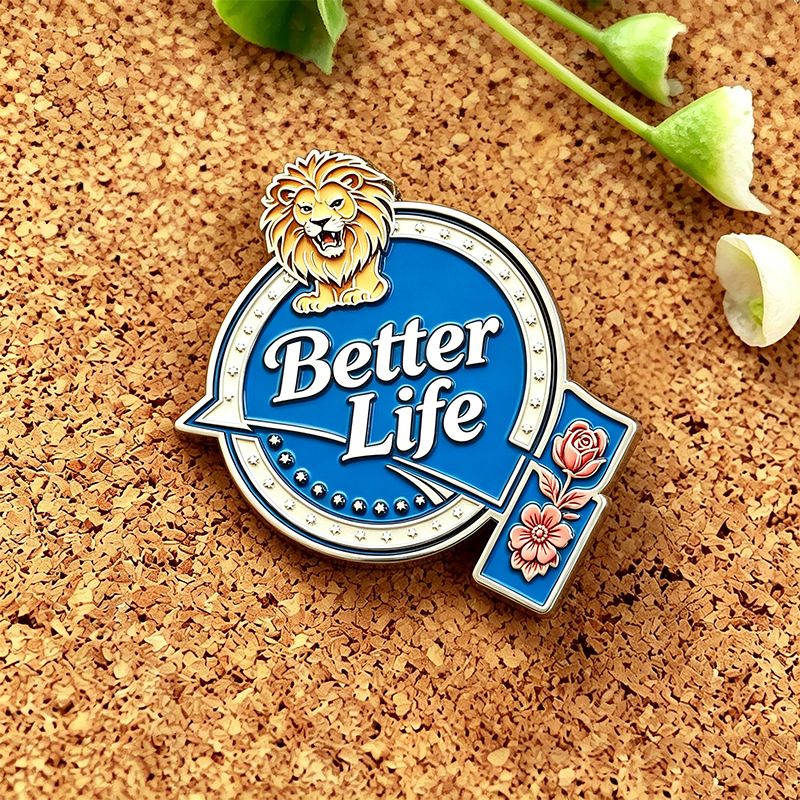
Review the complete pin on the intended clothing.
Place the sample on the shirt, jacket or uniform where it will be worn. Check its proportions, reading direction and balance, then try attaching and removing it in the usual way. Share the fabric thickness and intended position with the factory so the post placement and backing can be considered together. Compare the options in our pin backing guide.
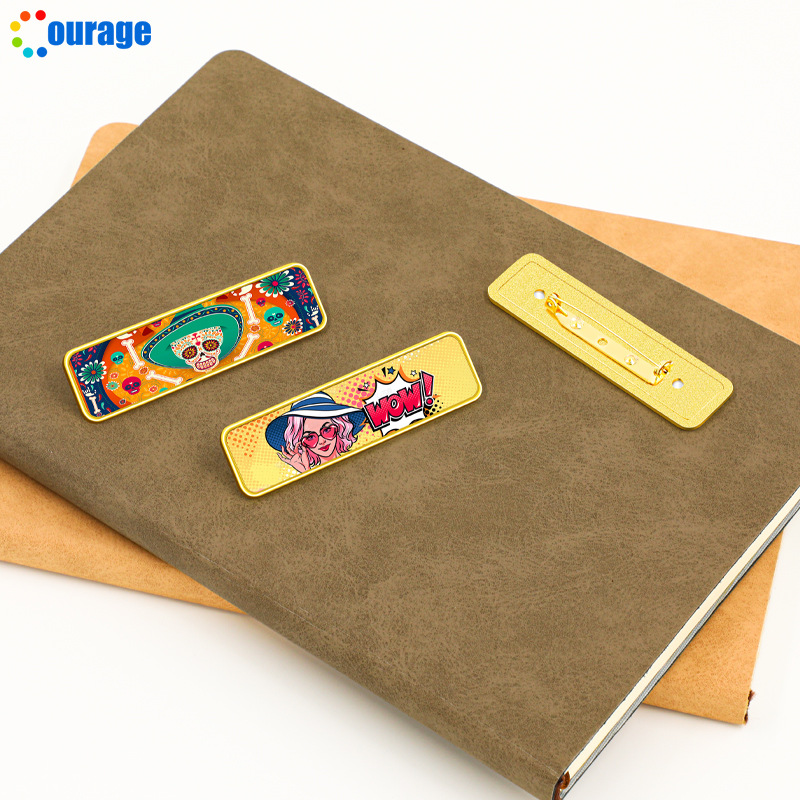
Next, turn the visual series into a production plan: which metal features stay fixed, when the milestone number is added, and how the color batches are organized. Those decisions affect both development and later replenishment.
3. Put each milestone’s net requirement into one production brief.
“We will present a thousand pins this year” describes the program’s scale. A breakdown by milestone shows what actually needs replenishing. Calculate that requirement first, then let the factory assess production options for the complete series.
Calculate each milestone separately
Net requirement = confirmed recipients + approved reserve − available stock − confirmed incoming stock due before presentation.
If the result is below zero, use zero as the net requirement.
Count stock already reserved for other presentations, incorrect versions and damaged pieces separately. Match incoming quantities to specific orders and arrival dates. This turns a warehouse count into a useful record of what is available for the current cycle.
The following hypothetical annual allocation illustrates the calculation. Set reserve quantities around your organization’s records of additional awards and replacements.
| Milestone | Confirmed recipients | Reserve | Available stock | Incoming before presentation | Net requirement |
|---|---|---|---|---|---|
| 5 years | 600 | 20 | 70 | 50 | 500 |
| 10 years | 340 | 12 | 40 | 20 | 292 |
| 20 years | 90 | 5 | 10 | 0 | 85 |
The total requirement is 877 pins, including just 85 for the twenty-year milestone. Assess that quantity mix alongside the complete artwork: what can stay common, what can change through finishing, printed numbers or packaging, and what needs a different metal structure?
Our custom enamel pin page lists a standard minimum of 500 pieces per design. For a series with several service milestones, send the artwork and quantities together so we can assess the following production routes. The project quotation can then identify the production quantity, minimum order conditions and cost for each version.
Route 01
Use a common metal base and add the milestone later.
If the outline and main logo stay the same, reserve a number area during design and assess adding “5,” “10” or “20” with localized UV printing. Plating or color fill can provide another distinction. Moving the milestone variation to a later decoration stage creates a basis for comparing a common-base production option.
Extra Dream’s plating and UV printing processes provide practical options for this discussion. Review the suitability of the number area, text contrast on each finish and the appearance of the complete sample when worn.
Route 02
Keep the milestone formed in metal and coordinate the rest.
If raised or recessed metal numbers are important to the design, retain that effect while keeping the outline, logo and decorative layout consistent. Assess the tooling and process changes associated with each number. Different numbers formed in the metal and numbers applied later to a common base are different development routes. Explain the effect you want to preserve so the factory can compare development costs, quantities and future reorders.
Route 03
Pair a common pin with milestone-specific presentation materials.
When shared brand identity matters most and the milestone can appear on accompanying materials, compare a common pin with a milestone card or gift-box label. The card can carry “20 YEARS OF SERVICE,” the employee’s name and a manager’s message while the pin remains consistent. If the milestone must be visible during wear, continue assessing the first two routes.
Compare initial development, finished quantities by milestone, packaging and expected replenishment together. If you are considering stock for future years, include the next cycle’s forecast and any planned brand changes to judge whether the extra pieces have a realistic use.
For quarterly presentations, include the annual forecast and required receipt date for each batch in your enquiry. Compare producing once with scheduled deliveries against placing separate production orders. Putting batch sizes, payment, storage responsibilities and freight for each shipment into the proposal gives procurement and HR one timetable to work from.
4. Approve and count each milestone separately.
Bring every milestone’s wording, colors and artwork revision into one approval list and sign off each version. The brand reviewer sees the complete series, and production and packing teams work from the same references.
Use the artwork review to compare the shortest and longest milestone wording. Plan physical samples around the actual differences: review the full number layouts for shared constructions, and list which finishes, color fills, outlines or backings need a physical comparison. Recording what each sample is intended to confirm keeps approval focused.
External milestone labels are particularly useful once a gift box hides the pin. A “10 YEARS” label on the box or grouped packaging, matched to the same wording on the packing list, helps staff find the correct award while keeping the presentation intact. If individual cards are included, assign responsibility for matching and checking them. Include label placement, assembly and group quantities in the packing plan.
At receipt, check the quantity, wording, approved revision, backing and packaging for every milestone. A correct total can still hide an excess of five-year pins and a shortage of ten-year pins. After distribution, record the number presented, reserve stock used and remaining usable pieces for each level.
5. Plan reorders around the next award cycle.
Begin replenishment with the next group of recipients. HR updates who will reach each milestone, then compares those figures with available and incoming stock to identify the versions that need replenishing.
Maintain a record of the milestone, approved artwork revision, available stock, reserved quantities, incoming quantities, next confirmed requirement and latest acceptable receipt date. Update it after each presentation or delivery.
To decide when to start a reorder, check whether usable stock and confirmed incoming pieces will cover presentations during artwork approval, production, transport and receiving inspection for the new order. Work back from the award calendar using the current production and transport arrangements.
Supply the previous approved artwork, specification and retained sample with the reorder brief. Compare the logo, lettering, number area, finish, color, post position and packaging. If the brand has changed, decide how the old stock will be handled and whether old and new versions may be presented during the same period.
Leave the next buyer a complete handover: approved artwork, specifications, retained samples, tooling records, packaging labels and actual usage. The factory can use those references to review the original tooling, requested changes and production arrangements, and a new purchasing contact can pick up the program with a clear record.
Copy the service pin RFQ template.
Send this brief with your quantity breakdown for every milestone.
Employee service award program
Program and presentation cycle: [individual anniversaries / quarterly / annual ceremony]
Period covered by this order: [dates]

Milestones and quantities: [list the current requirement for each milestone]
Future forecast: [list annual or quarterly projections separately]

Series design: Keep [logo, outline and main layout] consistent. Change [milestone numbers, wording or other details].
Number treatment: [raised/recessed metal / localized printing / please recommend]
Calendar year: [on the pin / on the accompanying card / omitted]

Wearing context: [clothing, intended position, target size and backing requirements]
Approval: Please recommend the artwork and physical sample review scope for the different versions.

Packing: [individual packaging, milestone labels and assembly]
Destination: [country and postal code]
Required in-hand date: [date]
Delivery pattern: [one delivery / quarterly presentations]

Please compare options for a common metal base, plating or color fill, and milestone numbers across the series. Identify production quantities, minimum order conditions, tooling and finished-item costs for each version, plus sampling, packing and shipping. Please recommend production and delivery arrangements suited to this program.
Share the complete series, including the smaller milestone quantities.
Send your logo, quantities for every milestone and required receipt date. We can discuss production routes around the shared design, number treatment and packing by milestone.
Discuss your service pin projectStill comparing award formats? Our employee recognition coin guide can help you consider a different presentation format.
Questions before you request a quote.
What should I send if a longer-service milestone needs only a small quantity?
Send the artwork, quantity breakdown and future forecast for the complete series. Explain whether the numbers need to be formed in metal or can be added through printing. This helps the factory assess production routes across the designs and quote the specific order conditions for each milestone.
Does each pin need the employee’s name?
Choose around how the award will be displayed. A name on an accompanying card keeps pins within a milestone consistent. If the pin itself needs individual names, send the intended name area and list so the factory can assess the process and include data checking, samples and costs in the proposal.
Can we use last year’s quotation for the next order?
Use the previous artwork and sample as the starting reference, then update the quotation around the new quantities, original tooling condition, packaging and required delivery date. Complete records help successive orders follow clear, consistent product requirements.