
Custom medal base-material guide
Zinc alloy vs brass vs iron: which material fits your medal?
Choose the base material around the artwork, production method, weight, finish, handling and budget. Gold, silver or copper color alone does not identify what the medal is made from.
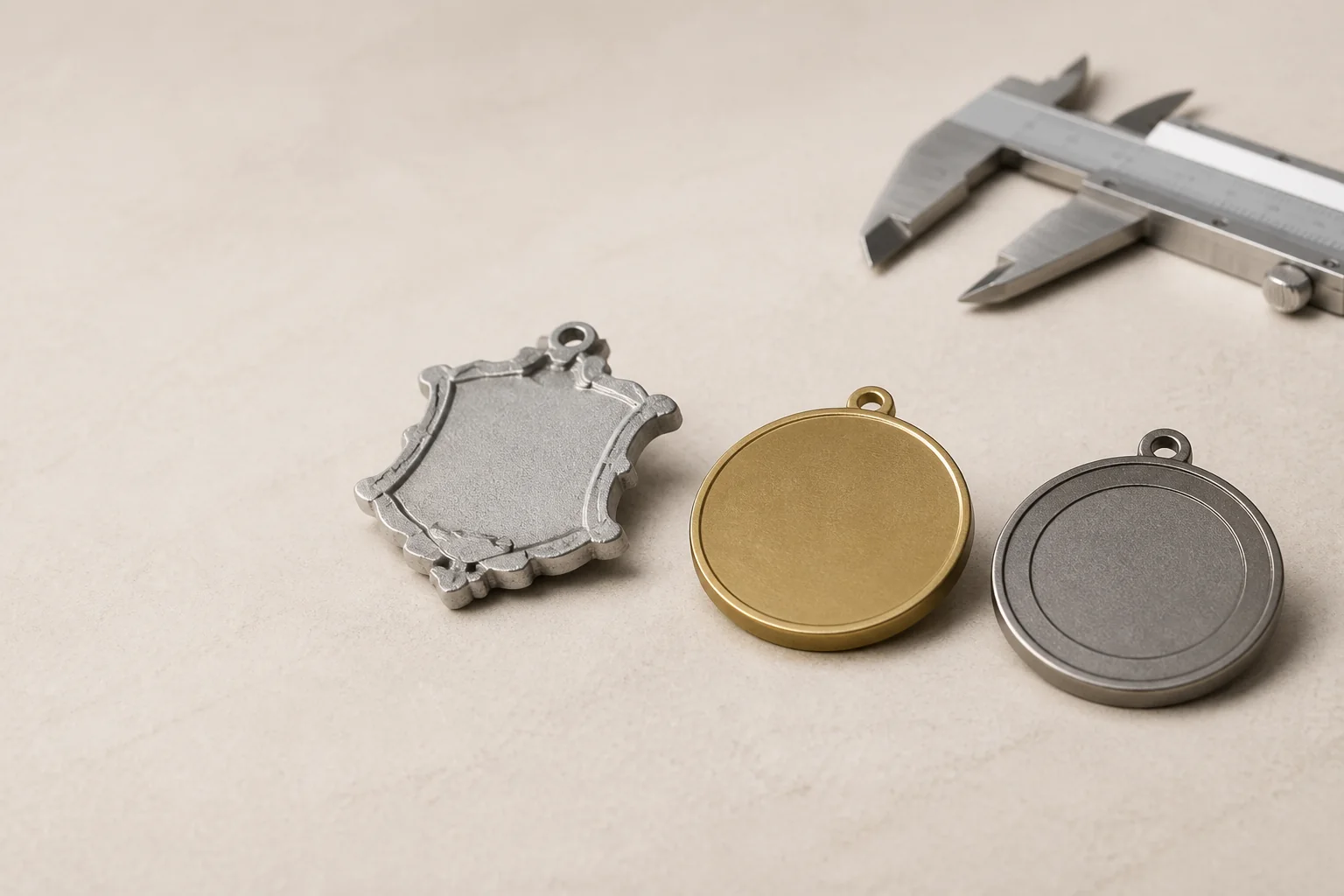
Zinc alloy is often selected for complex outlines, cut-outs and deeper 3D relief made by die casting. Brass suits stamped or coined designs where a traditional solid-metal feel and clean edges matter. Iron is commonly considered for simpler stamped designs and cost-controlled volume. The best choice depends on the complete specification—not one material name.
Base material and metal finish are different decisions
A gold-colored medal is not automatically brass. A silver-colored medal is not necessarily iron, and an antique-copper medal does not have to be copper. Zinc alloy, brass and iron can all receive selected plating, antique treatments, paint or enamel.
- Base material: the metal body that gives the medal its construction, weight and manufacturing behavior.
- Production method: commonly die casting for complex zinc-alloy forms, or stamping/coining for suitable sheet-metal and blank constructions.
- Finish: plating, brushing, polishing, antiquing or another surface treatment applied after forming.
- Color decoration: enamel, print, epoxy or other additions placed on selected areas.
Use wording such as “zinc-alloy base with antique-brass finish” or “iron base with bright-silver plating.” This prevents a color name from being mistaken for a material specification.
See the custom metal finish guide for bright, satin, antique and dual-finish directions.
Zinc alloy, brass and iron at a glance
| Decision | Zinc alloy | Brass | Iron |
|---|---|---|---|
| Common forming direction | Die casting | Stamping, coining or selected forming | Stamping or coining |
| Artwork strength | Complex outlines, cut-outs and sculpted relief | Clean stamped relief, borders and traditional coin-like forms | Clear, simpler relief and high-volume standard forms |
| Raw appearance | Light gray cast surface | Warm yellow metal tone | Cool gray ferrous surface |
| Magnetic response | Generally not attracted like iron | Generally non-magnetic | Normally attracted to a magnet |
| Weight discussion | Depends on alloy and cast geometry | Often feels substantial at equal dimensions | Depends strongly on sheet thickness and design |
| Buyer priority | Design freedom | Solid traditional presentation | Simplicity and production economy |
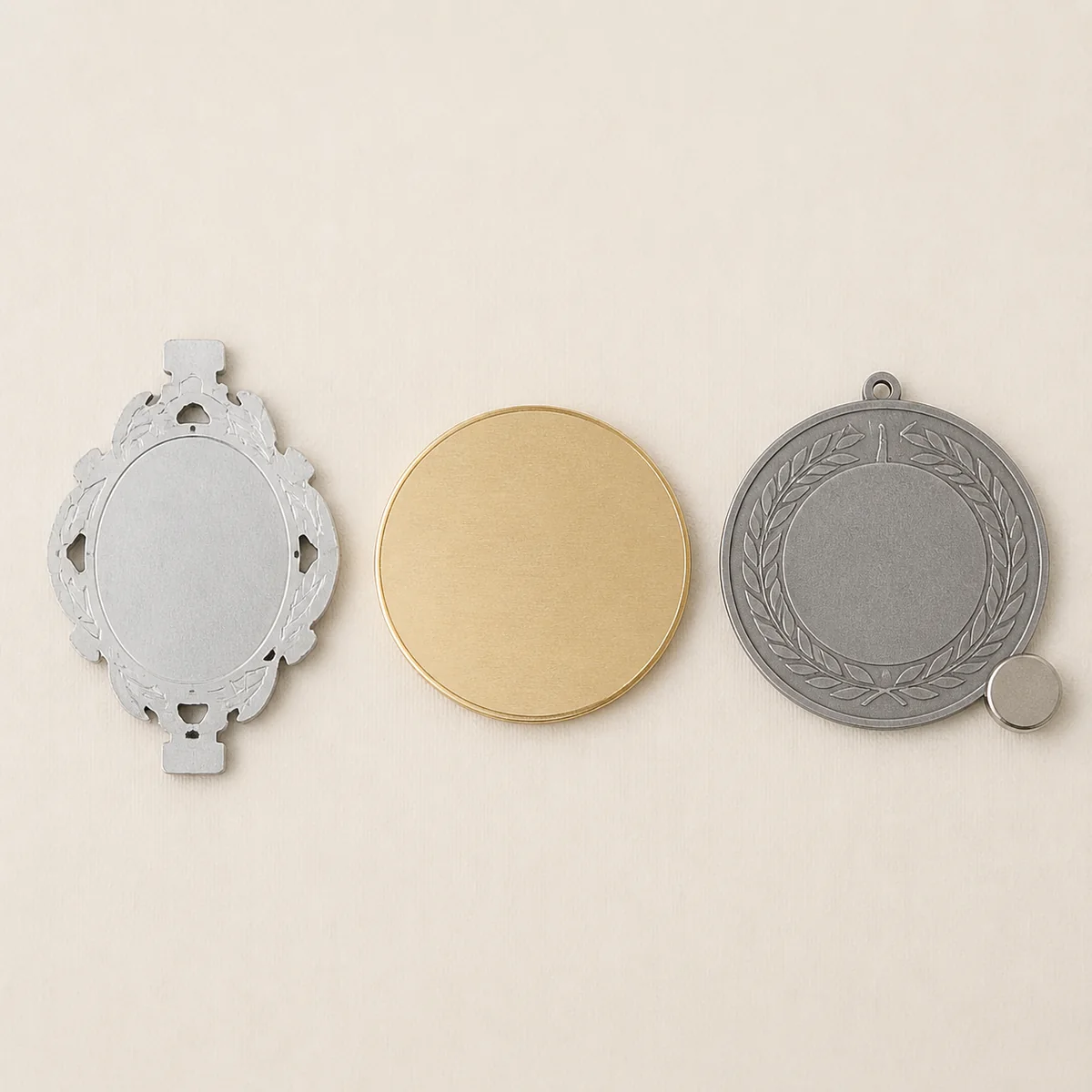
This table is a sourcing guide, not a substitute for an engineering specification. “Zinc alloy,” “brass” and “iron” each cover multiple compositions and tempers. Ask the supplier what material is actually quoted when compliance or performance matters.
When zinc alloy is the practical choice
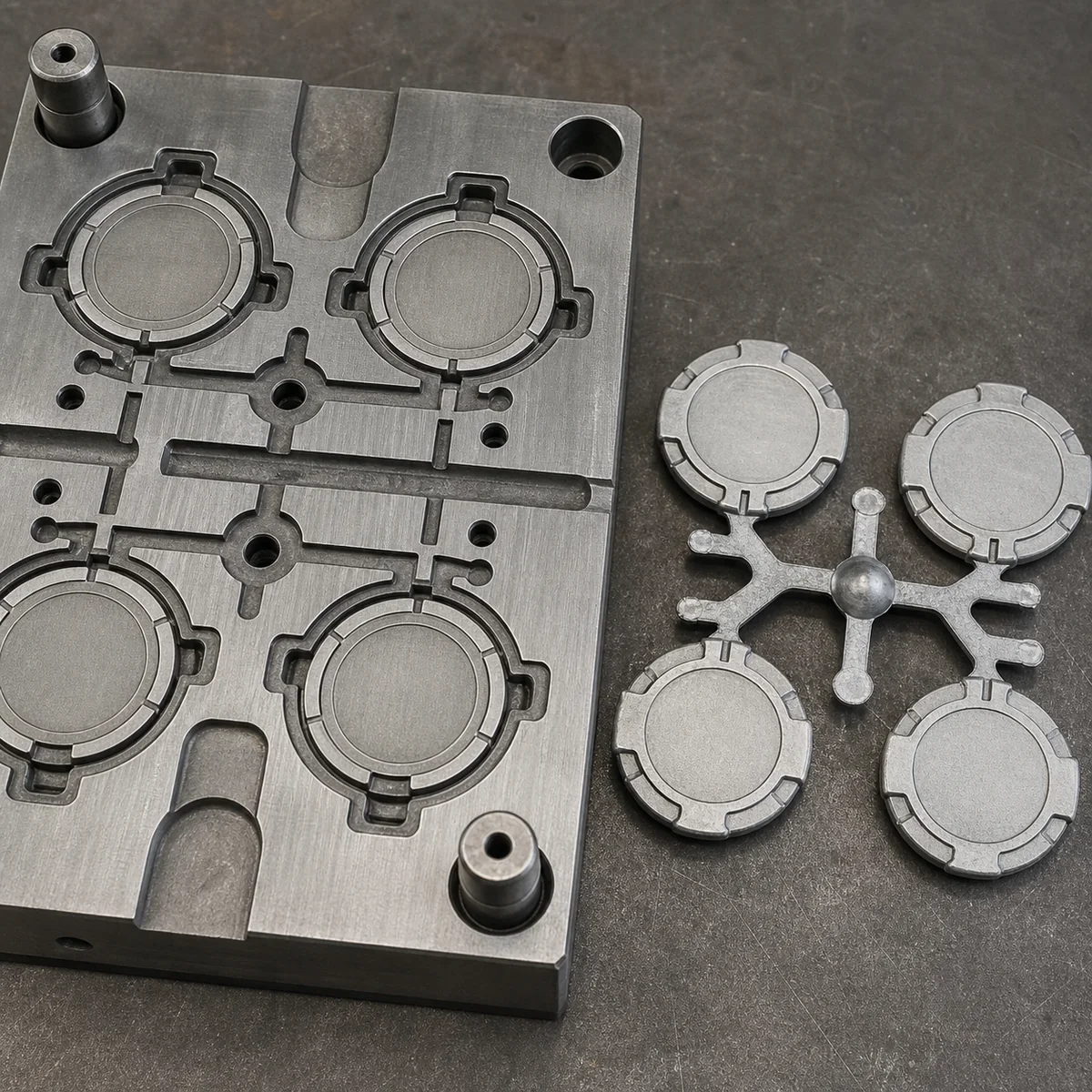
Zinc alloy is commonly die cast: molten alloy fills a reusable steel die, cools and is released as a shaped part. The process supports design features that can be difficult to create economically from a flat stamped blank.
Complex custom outline
Curves, projections, open areas and integrated loops can be planned into one cast construction.
Deeper 3D modeling
Sculpted faces, mascots, architecture and layered relief can use the available medal thickness more freely.
Texture and recessed detail
Raised, recessed, smooth and textured zones can be combined before plating and color filling.
Integrated construction
Attachment geometry and decorative edge features may be incorporated into the casting design.
Zinc alloy is not automatically the lightest or cheapest option. A large, thick casting may weigh and cost more than a thinner stamped piece. Tooling, polishing, plating, enamel, reject control and quantity all affect the quotation.
When brass supports the intended presentation
Brass is a copper-zinc alloy family with a natural warm tone. Medal blanks can be stamped or coined to create borders, lettering and relief. It is often considered when buyers want a traditional coin-like construction or a substantial presentation piece.
- Clear stamped relief: well-planned raised and recessed levels suit emblems, seals and formal award designs.
- Solid edge: a round or controlled outline can show a clean, consistent side profile.
- Natural material tone: unplated brass has its own yellow color, although many orders still use plating or antiquing.
- Perceived substance: brass can feel weighty at equal dimensions, but the actual sample weight must be compared.
Brass does not guarantee a better medal. If the artwork depends on deep sculpting, multiple cut-outs or a highly irregular outline, zinc-alloy die casting may reproduce the concept more directly. Let the final artwork determine the method.
When iron is suitable for a custom medal
In promotional-product quotations, “iron” commonly refers to an iron-based or low-carbon ferrous blank used for stamped pieces. Because commercial labels can be broad, request the exact material description when it matters to the project.
- Simple, readable construction: round, shield and other controlled outlines with clear 2D relief are practical directions.
- Volume planning: stamping can suit repeatable production when the design and thickness are appropriate.
- Magnetic response: attraction to a magnet is a useful demonstration of an iron-based body.
- Surface protection: plating and coating quality matter because exposed ferrous metal can be more vulnerable to corrosion.
A magnet test is supporting evidence, not the purchase specification. The quotation, approved sample and supplier declaration should identify the base material.
Do not compare material weight without dimensions
Buyers often ask which metal is heaviest, but a finished medal is not a laboratory cube. Diameter, thickness, cut-outs, relief volume, ribbon loop and attachments can change weight more than the material name alone.
| Comparison method | Useful? | Reason |
|---|---|---|
| Same diameter only | Limited | Thickness, relief and open areas may still differ. |
| Same diameter and thickness | Better | Geometry and relief volume still need to match. |
| Approved samples on a scale | Best practical check | Measures the complete construction buyers will receive. |
| Supplier estimate before tooling | Planning only | Useful for freight estimates but should be updated after sampling. |
For dimension planning, use the custom medal size and thickness guide.
Which material costs less?
No single ranking is reliable for every design. A simple iron medal may support a cost-controlled program, while a complex design could require different tooling or finishing. Brass material cost may be higher, but a straightforward stamped construction can still be commercially sensible. Zinc alloy may reduce design compromises for a complicated shape even when tooling is involved.
- Compare identical dimensions: diameter, thickness and edge construction.
- Compare identical artwork: relief depth, cut-outs, reverse design and color areas.
- Compare identical finish: plating, antique treatment, polishing and protective coating.
- Compare the complete unit: ribbon, attachment, packaging, inspection and freight.
- Compare realistic quantities: fixed tooling and setup are distributed differently at each order size.
Use the custom medal cost guide and order-rules guide when reviewing quotations.
A practical selection sequence
Start with the artwork
Identify required outline, cut-outs, relief depth, small text and reverse detail.
Define the experience
Confirm whether the medal should feel light, substantial, traditional, sculptural or budget controlled.
Review the process
Ask why the supplier recommends casting or stamping for the approved design.
Approve a full sample
Check weight, edge, relief, finish, color, attachment and packing together.
“Please quote the recommended base material and one practical alternative. State the forming method, dimensions, estimated weight, finish, tooling, unit price and any design differences between the two options.”
Material quotation checklist
- Artwork: front, reverse and side-profile requirements.
- Dimensions: width or diameter, thickness and target weight when relevant.
- Base material: zinc alloy, specified brass or specified iron-based material.
- Forming method: die cast, stamped, coined or another confirmed process.
- Finish: plating color, bright or antique direction, texture and protective treatment.
- Quantity: total pieces and variants by award level or event.
- Assembly: ribbon, loop, ring, hook and packaging.
- Destination: country, required date and any compliance documentation.
Add these items to the custom medal order checklist before requesting comparable quotations.
Frequently asked questions
Which material is best for a detailed 3D custom medal?
Zinc-alloy die casting is often a practical starting point for complex outlines, cut-outs and sculpted 3D relief. Final suitability depends on size, thickness, tooling and artwork.
Is a gold-colored medal made from brass?
Not necessarily. Gold color may be plating over zinc alloy, brass or iron. State the base material and finish separately.
Are iron custom medals magnetic?
Iron-based stamped medals are normally attracted to a magnet. Use the written specification as the primary material record.
Is brass always heavier than zinc alloy or iron?
Not in every finished product. Real medals differ in thickness, relief and cut-outs. Compare approved sample weights using the same design.
Does zinc alloy rust?
Zinc alloys and iron-based materials have different corrosion behavior, but every finished medal also depends on plating, coating, storage and use. Review the required environment with the supplier.
Which material is cheapest?
There is no universal answer. Compare the same artwork, dimensions, finish, quantity, ribbon, packing and delivery terms.